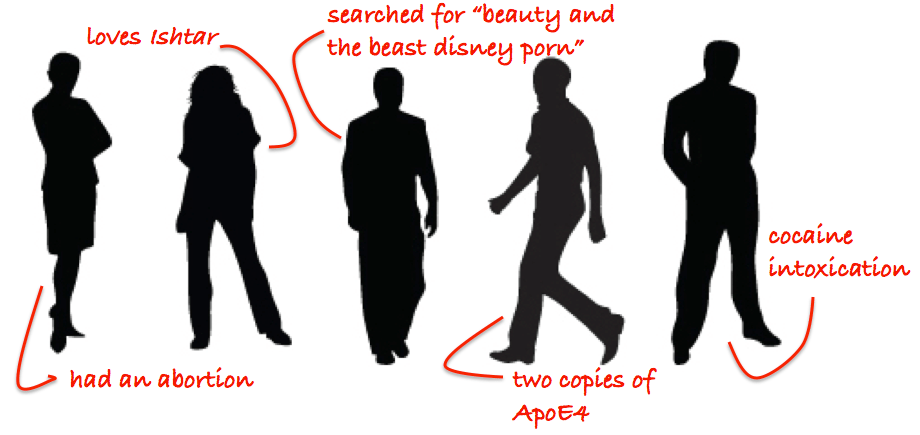
Law, Ethics, & Science of Re-identification Demonstrations
By Michelle Meyer
Over the course of the last fifteen or so years, the belief that “de-identification” of personally identifiable information preserves the anonymity of those individuals has been repeatedly called up short by scholars and journalists. It would be difficult to overstate the importance, for privacy law and policy, of the early work of “re-identification scholars,” as I’ll call them. In the mid-1990s, the Massachusetts Group Insurance Commission (GIC) released data on individual hospital visits by state employees in order to aid important research. As Massachusetts Governor Bill Weld assured employees, their data had been “anonymized,” with all obvious identifiers, such as name, address, and Social Security number, removed. But Latanya Sweeney, then an MIT graduate student, wasn’t buying it. When, in 1996, Weld collapsed at a local event and was admitted to the hospital, she set out to show that she could re-identify his GIC entry. For twenty dollars, she purchased the full roll of Cambridge voter-registration records, and by linking the two data sets, which individually were innocuous enough, she was able to re-identify his GIC entry. As privacy law scholar Paul Ohm put it, “In a theatrical flourish, Dr. Sweeney sent the Governor’s health records (which included diagnoses and prescriptions) to his office.”
Sweeney’s demonstration led to important changes in privacy law, especially under HIPAA. But that demonstration was just the beginning.
Most recently, Sweeney and colleagues re-identified participants in Harvard’s Personal Genome Project (PGP), who are warned of this risk, using the same technique she used to re-identify Weld in 1997. As a scholar of research ethics and regulation — and also a PGP participant — this latest demonstration piqued my interest. Although much has been said about the appropriate legal and policy responses to these demonstrations (my own thoughts are here), there has been very little discussion about the legal and ethical aspects of the demonstrations themselves. As a modest step in filling that gap, I’m pleased to announce an online symposium.