By Nicole Hassoun
Ebola is ravaging parts of Africa, yet it is not the worst health problem facing people in the region. Millions more are infected with and die every year from diseases like malaria, TB, and HIV/AIDS because they cannot access the essential medicines they need. To change this, we need to understand where we are succeeding in combating these diseases, and where we need to focus our efforts. Until now, this information has been sorely lacking.
Fortunately, the beta for a new Global Health Impact index has just launched that can help us address the access to medicines problem (check out: global-health-impact.org). Using the index, you can see the impact of the drugs for HIV, malaria, and TB in each country in the world. You can also get a sense for the overall impact we are having on the different diseases in the model. Finally, one can see drugs’ impacts by originator company.
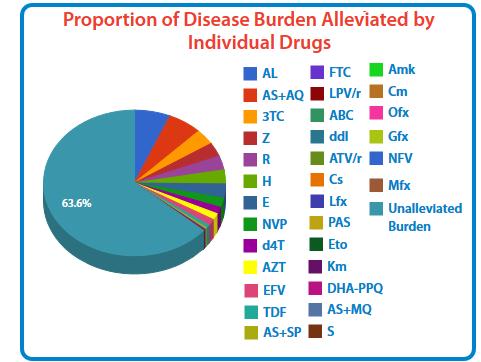
To create the rating system, researchers estimate the potential impact of each drug and aggregate drugs’ estimated impacts on global health as described above — by country, disease, and company. To do this, we use information on the need for different essential medicines (e.g., the death and disability due to the diseases they treat), information about access to the drugs (e.g., treatment percentages), and information about drug effectiveness (e.g., efficacy estimates).
You can learn more about the index on our website global-health-impact.org and check out our resources.
The Global Health Impact rating system opens the door to many new ways of increasing access to essential medicines. International organizations might use it in incentivizing stronger performance from country-level health systems in alleviating the burden of disease. Governmental and non-governmental organizations might use it to decide where it is best to focus their investments.
Researchers can partner with the Global Health Impact organization — a collaboration of scholars from universities and civil society organizations from around the world – to get a better picture of the causes and consequences of access to essential medicines.
Together we can improve our global health impact!
For some recent news about the project see:
https://www.marketplace.org/topics/health-care/new-effort-ranks-drug-makers-impact