By Temple University Center for Public Health Law Research
A team of researchers led by Jennifer Pomeranz, JD, MPH, Clinical Assistant Professor of the College of Global Public Health at New York University, have released a new set of resources that detail characteristics of laws related to workplace wellness programs and identify trends in these laws across the United States: interactive maps for public and private employers at LawAtlas.org and a paper published in the American Journal of Public Health.
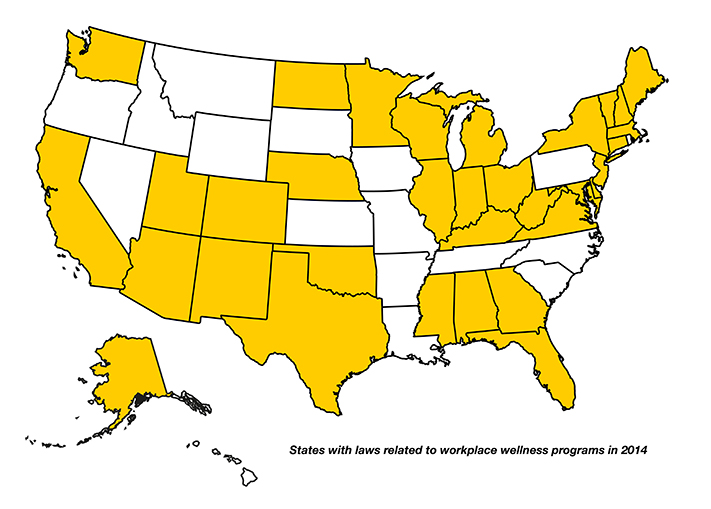
A few key findings:
- Thirty-three states and the District of Columbia have laws related to workplace wellness programs.
- Four states (Georgia, Indiana, Maine and Massachusetts) provide tax incentives for work place wellness programs.
- State laws addressed public and private employers differently, for example, five states permit rewards (e.g., discounts, rebates and waivers) by public employers, whereas 16 states expressly permit positive rewards for participation in programs by private employers.
The research was funded by the Robert Wood Johnson Foundation’s Public Health Law Research Program.