Massachusetts Lags Behind on CPR Education — It’s Time to Catch Up
Every year, more than 350,000 Americans experience cardiac arrest in non-hospital settings. But only about 1 in 10 survive. The single most important factor in whether someone lives? Whether a bystander provides cardiopulmonary resuscitation (CPR).
Published
Author
Share
Every year, more than 350,000 Americans experience cardiac arrest in non-hospital settings. But only about 1 in 10 survive. The single most important factor in whether someone lives? Whether a bystander provides cardiopulmonary resuscitation (CPR).
CPR can double or even triple survival rates. It’s a simple skill, but it’s not equally taught, learned, or applied. And in states like Massachusetts, a lack of legislative action is part of the problem.
Right now, Massachusetts lawmakers have the chance to fix that. Bill H.4107, currently pending in the state legislature, would require all public high school students to learn hands-only CPR and AED use before graduation. It’s a small policy change with important implications, particularly for communities of color and historically underserved neighborhoods.
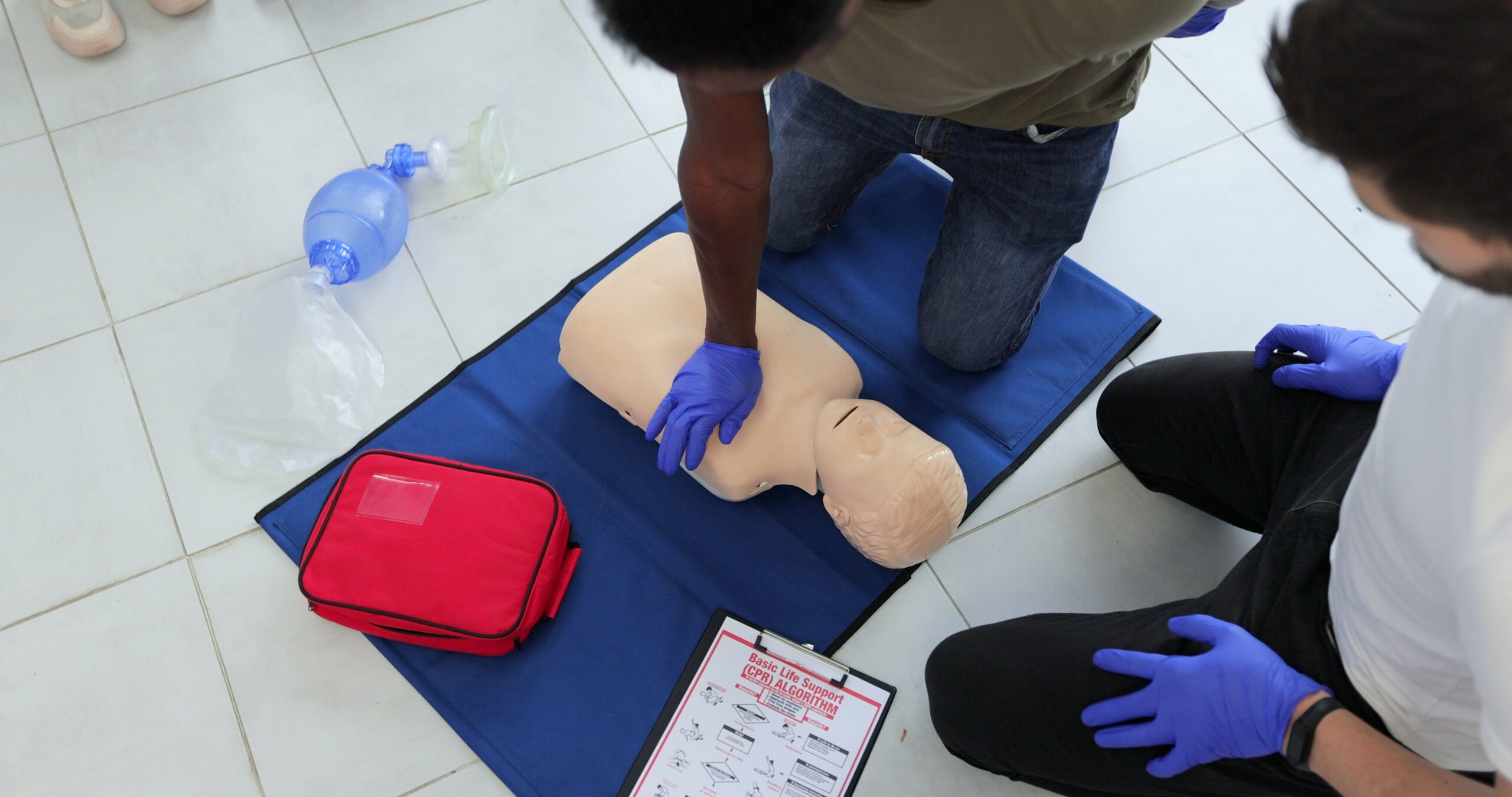
As an EMT and CPR instructor, I’ve taught in schools and shelters across Boston. I’ve seen how empowering it is for young people to press their hands to a mannequin and feel the rhythm of lifesaving compressions. I’ve also seen hesitant glances — the silent question: “Could I do this if it mattered?” Teaching CPR isn’t just about technique. It’s about showing people, especially young people, that they can take action in an emergency.
MCPR Access is an Equity Issue
While cardiac arrest can strike anyone, not everyone receives help. A 2022 study in the New England Journal of Medicine found that Black and Hispanic people in the U.S. were significantly less likely to receive bystander CPR — 26 percent less likely at home, and 37 percent less likely in public — than white individuals.
That difference isn’t about willingness. It’s about access to training, historical mistrust of emergency services, language barriers, and the real cost of CPR certification — often $50 to $100. In many low-income neighborhoods, free training doesn’t exist.
It’s not a coincidence that Black communities have higher rates of cardiovascular disease and stroke. There are fewer preventive resources. Less trust in medical systems. And when a cardiac arrest happens, there’s less likelihood that someone nearby knows what to do.
Other States Are Leading; Why Not Massachusetts?
Thirty-nine states already require CPR education for high schoolers. The data show it works. Teaching students early normalizes a lifesaving skill. It multiplies the number of trained individuals in a community. And it reduces fear; students go home and teach their families what they learned.
In Washington state, when a similar bill faced resistance due to costs, policymakers partnered with EMS agencies and nonprofits to supply training kits and instructor support. That model can work here, too. Massachusetts has the health care infrastructure and institutional leadership to become a national example. But we haven’t passed the law. Why are we still waiting?
Massachusetts Lags Behind in CPR Legislation
Despite broad public support, Massachusetts has repeatedly failed to pass legislation requiring CPR instruction for high school graduation. The most recent effort — House Bill H.492, introduced in the 2023–2024 session — advanced further than prior attempts. It received a favorable report from the Joint Committee on Education in February 2024 and was read a second time in the House in March. Yet, no further action was taken before the session ended on December 31, and the bill quietly died without a final vote.
This is not an isolated case. Over the past decade, multiple CPR education bills — including H.464 in 2023 — have followed a similar trajectory: early momentum, committee approval, and then legislative inaction. H.464 was accompanied by a study order in December 2024 — a procedural move that effectively shelved the bill for the remainder of the session without requiring a vote. Meanwhile, 39 other states have successfully enacted similar laws. Massachusetts, despite its world-class medical institutions and public health leadership, continues to fall behind, leaving students unprepared to respond in emergencies.
Although CPR education legislation in Massachusetts enjoys bipartisan support, it continues to falter in the final stages of the legislative process. While the exact reasons for this recurring failure are unclear, I believe two primary obstacles stand in the way. First, there appears to be a lack of infrastructure or funding mechanisms to help schools acquire the necessary materials to implement CPR training effectively. Without a clear, statewide system for supporting schools — particularly those in underfunded districts — legislators may hesitate to impose an unfunded mandate. Second, despite the life-saving potential of CPR education, leadership may not view it as a high-priority issue compared to other legislative issues. As a result, CPR bills often stall before reaching the floor for a final vote, leaving Massachusetts behind much of the country in preparing students to act in emergencies.
Community-Based Training Works, But It Needs Statewide Support
Programs like CPR vans, barbershop-based instruction, and peer-to-peer training in immigrant communities have made meaningful inroads in underserved areas. Barbershop-based instruction brings lifesaving education directly into reused community spaces, offering CPR training in places like barbershops, which often serve as informal hubs in Black and Latino neighborhoods. In Denver, targeted community training improved bystander CPR in high-risk neighborhoods by engaging residents directly.
Still, piecemeal programs aren’t sufficient. Without consistent school-based education, each new generation enters adulthood without the skills to intervene. And it’s not just about saving strangers — more than 70 percent of cardiac arrests happen at home. The life someone saves will most likely be that of a loved one.
CPR Is About More Than Emergencies — It’s About Empowerment
CPR training also opens doors. For youth, it builds confidence and for those reentering society after incarceration, CPR certification can be a valuable asset. Programs like the STRIVE Employment Model provide soft-skills training to enhance employment outcomes and reduce recidivism among formerly incarcerated individuals. For those reentering society after incarceration, CPR certification offers a tangible way to demonstrate readiness to contribute positively to the community and the workforce. Teaching CPR isn’t limited to medical outcomes. It’s also about readiness and public empowerment.
Massachusetts Shouldn’t Lag Behind
Bill H.4107 is actionable, and designed to be accessible. It doesn’t require new graduation credits or expensive equipment. It integrates CPR training into existing curricula and establishes a fund to support the cost of CPR instruction and materials. This approach mirrors successful models already used in 39 states. Massachusetts has the institutions to make this work. What we lack is a law.
We often speak about structural inequities in health care, but CPR isn’t abstract — it’s lifesaving and something we can put in people’s hands today. While other states have already taken action to expand access and training, Massachusetts is still behind. If we truly believe in health equity, it’s time to catch up to the rest of the country. All it takes is a vote.