Event Recap: Toward Psychedelics Access: Go Faster or Slower?
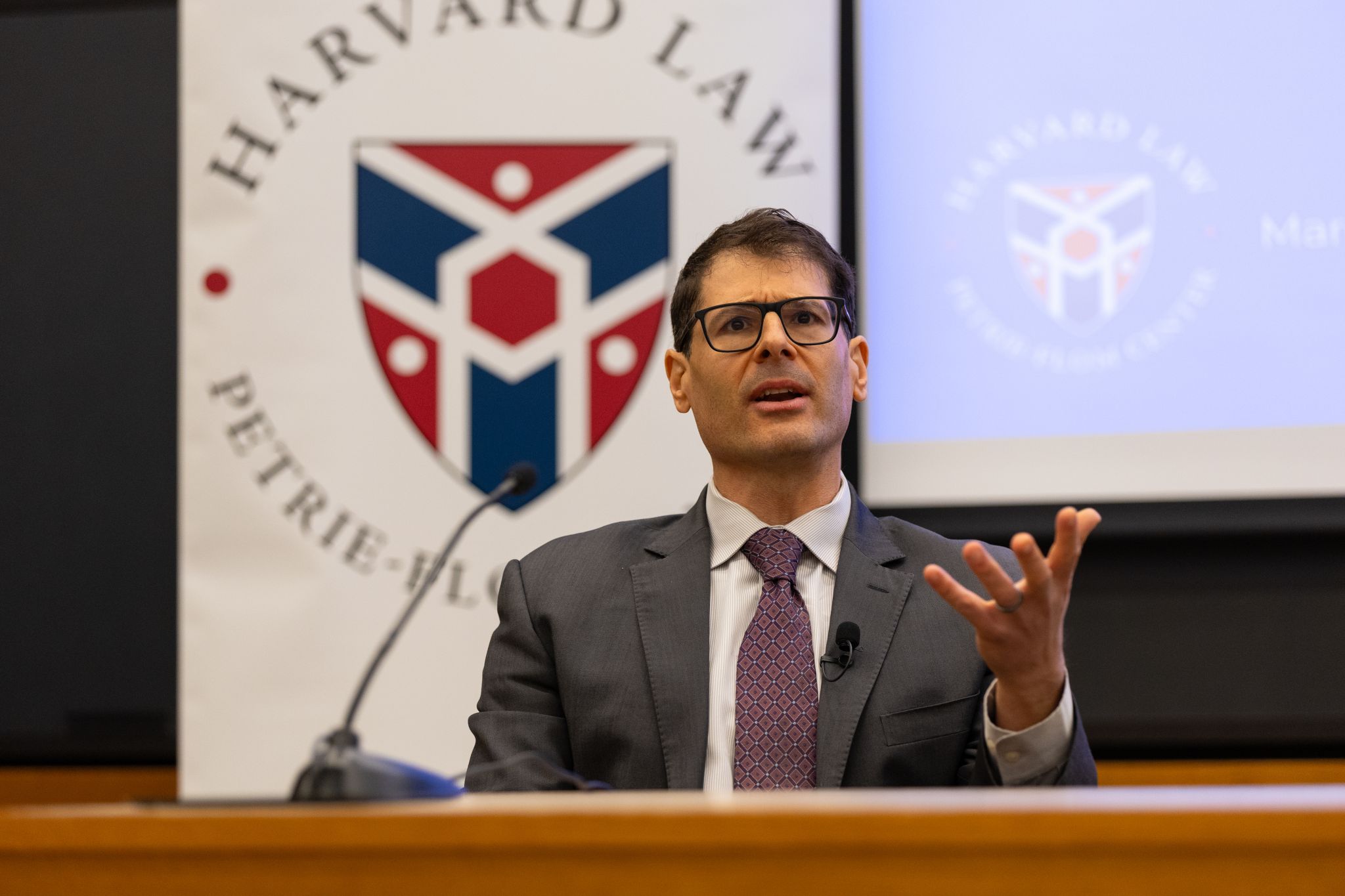
“We’re framing today as a relatively simple debate — perhaps an overly simple one,” began I. Glenn Cohen, Deputy Dean and Professor at Harvard Law School and Faculty Director of the Petrie-Flom Center, as he opened the Center’s recent event, Toward Psychedelics Access: Go Faster or Slower?
Published
Author
Photo Credit
James Rasaiah, HLS
Share
“We’re framing today as a relatively simple debate — perhaps an overly simple one,” began I. Glenn Cohen, Deputy Dean and Professor at Harvard Law School and Faculty Director of the Petrie-Flom Center, as he opened the Center’s recent event, “Toward Psychedelics Access: Go Faster or Slower?”
Too often, he suggested, public debate collapses into binaries — enthusiast or skeptic, hype or backlash — when the real challenge is understanding how to maximize benefits, minimize risks, and integrate psychedelics into existing medical, legal, and community frameworks. The goal of the discussion, he told the audience, was the move beyond “yes or no” and toward a deeper examination of the complicated middle.
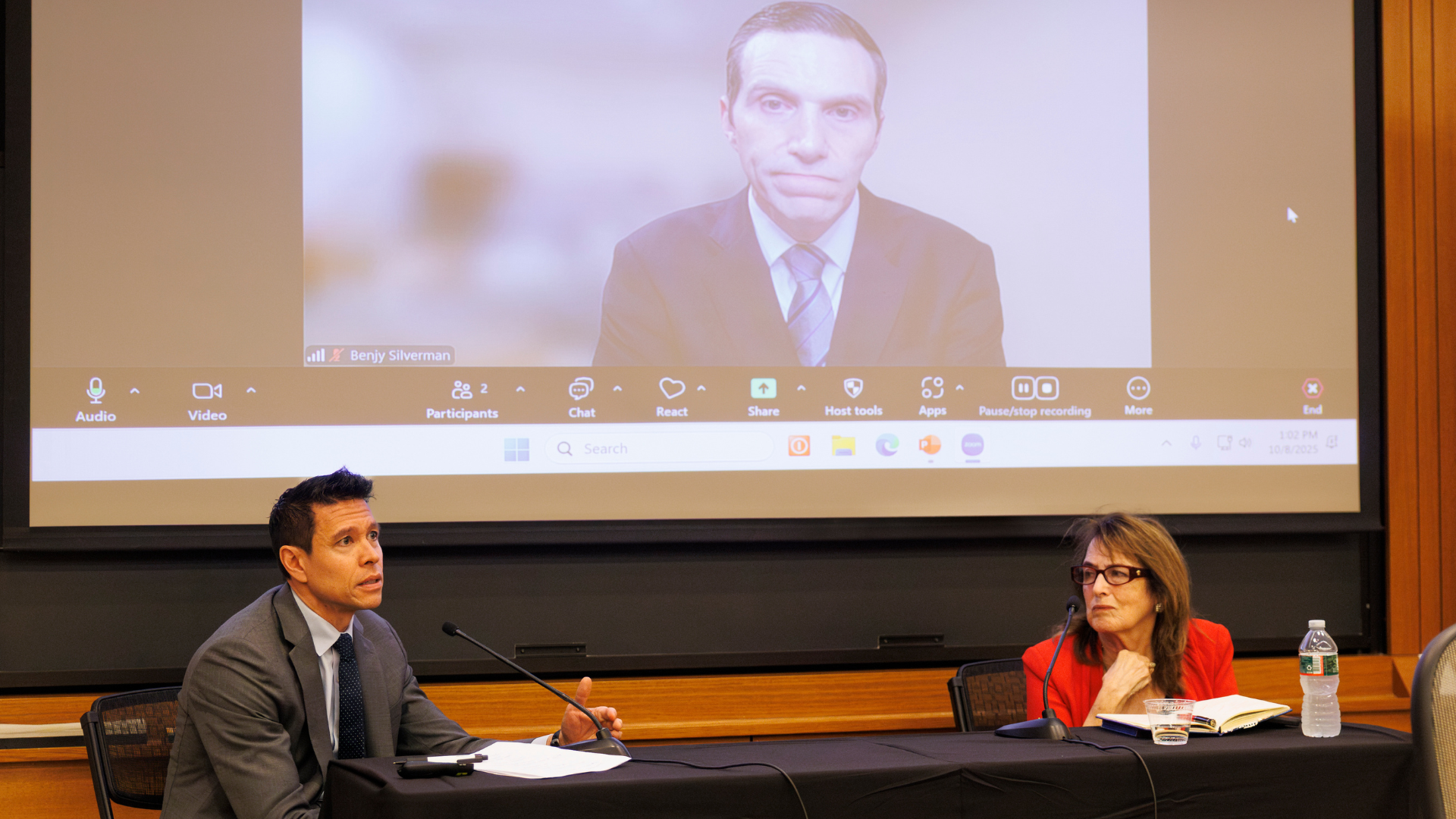
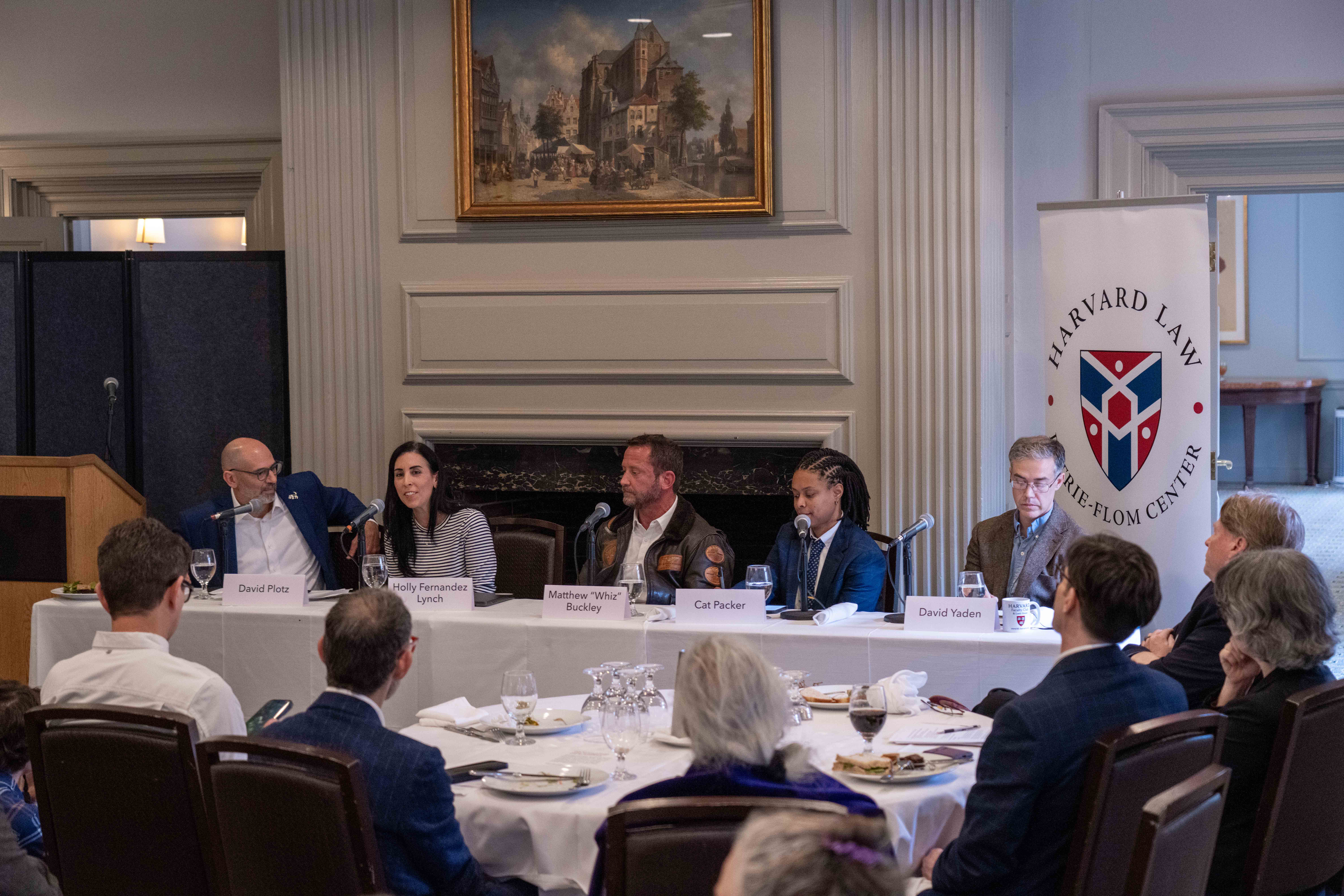
These tensions, among speed, safety, and structure, animated a wide-ranging discussion moderated by David Plotz, co-host of the Slate Political Gabfest, former editor-in-chief of Slate Magazine, and former CEO of Atlas Obscura. He was joined by four panelists:
- David Yaden, Griffith Professor in Psychedelic Research at the Johns Hopkins University and Principal Investigator of The Yaden Lab;
- Holly Fernandez Lynch, Associate Professor of Medical Ethics and Law at the University of Pennsylvania;
- Matthew “Whiz” Buckley, Navy Top Gun fighter pilot, President of the No Fallen Heroes Foundation, and founder of the Sacred Warrior Fellowship; and
- Cat Packer, Director of Drug Markets and Legal Regulation at the Drug Policy Alliance and Distinguished Cannabis Policy Practitioner in Residence at the Ohio State University Drug Enforcement and Policy Center.
Together, they explored the scientific, regulatory, ethical and social implications of expanding access to psychedelics, and what “faster” or “slower” might really mean.
Scientific Promise and Scientific Gaps
Plotz began by asking Yaden to anchor the audience in science. At Johns Hopkins, Yaden explained, “psychedelics” refers narrowly to the classic serotonergic compounds — psilocybin, LSD, DMT — rather than the broader catch-all that often include ketamine, MDMA, or even cannabis. Psilocybin, in particular, is deep into phase 3 trials for depression and substance use disorders. “It would be hard to say there’s no evidence of a clinical signal,” Yaden observed. But he insisted the conversation must remain grounded in evidence as well as enthusiasm. While early findings are promising, large, rigorously controlled trials remain rare, in part because the field relies heavily on philanthropy. “The ‘white whale,’” he said, “is NIH-level funding for large, well-powered studies with active controls.” Without them, researchers risk drawing premature conclusions or overstating generalizability — especially given how dramatically risks can increase outside a controlled clinical environment.
The problem of randomized controlled trials looms large. Since psychedelic effects are so distinctive, maintaining blinding is difficult. Yaden emphasized that this challenge is surmountable with creative study designs and lower-dose “active placebos,” but doing so is expensive. “Philanthropy can’t get us there,” he said plainly.
Medical Models, Spiritual Models, and Everything in Between
While Yaden articulated the scientific tightrope, Buckley offered an intensely personal lived experience, shaped by military service, trauma, and community-based healing. A former Navy Top Gun fighter pilot, he described how childhood trauma, combat experience, and the suicides of fellow service members led him to psychedelic-assisted therapy with ibogaine.
He described this experience as a spiritual “sacrament,” one that reconnected him with faith and transformed his life. This event led him to found both the No Fallen Heroes Foundation and the Sacred Warrior Fellowship, an entheogenic church that conducts structured psilocybin retreats. For him, ibogaine and psilocybin function as sacraments, not clinical interventions. His story, of profound trauma, military loss, addiction, and what he described as “the most spiritual experience of my life,” framed access as a matter of survival. “Trauma is trauma,” he said. “If we go too slow, more people die.”
His model, however, raised questions about variability in outcomes. Lynch, speaking from the regulatory and ethical side, emphasized that clinical data already shows wide response curves: some people improve dramatically, others do not, and a non-trivial number worsen. In that context, she argued, “If you’re making medical claims, you should have to prove those medical claims.” For her, holding psychedelic medicines to the same evidentiary standard as any other drug is a matter of safety, legitimacy, and equity.
Regulation, Equity, and the Legacy of the Drug War
Packer encouraged the audience to see psychedelics within the longer arc of American drug policy. Drawing from her decade in cannabis law and reform, she emphasized that “drug policies themselves can be just as harmful as the drugs.” For her, access conversations must begin with equity. This includes who bears the risks of criminalization, who benefits from emerging legal markets, and how to prevent the commercialization pathways seen in cannabis from reproducing past harms.
She urged policymakers to avoid reductive categories such as “medical” and “recreational,” advocating instead for “a more nuanced taxonomy” that reflects the diverse reasons people use psychedelics — medical, spiritual, communal, or personal. Regulators, she argued, act as the bridge between prohibition and whatever comes next, and “it’s critically important that we have folks who understand the community at that table.”
Twenty states have already decriminalized psychedelics in some form, and Colorado has introduced a personal-use model. But Packer warned that early decriminalization enthusiasm can fade when commercial interests dominate the policy space. Without sustained community engagement, she said, “legalization becomes an event, not a process,” and vulnerable communities can suffer.
Federal Policy, Politics, and the FDA Role
Plotz also asked about federal oversight, particularly given shifting political winds. Lynch noted that the current FDA is unusually favorable toward psychedelic therapies but also facing unprecedented political pressure. The MDMA application that failed last year did so not because the FDA rejected psychedelics outright, she explained, but because the company did not meet safety and trial-design expectations. Psilocybin, by contrast, is now on a rolling review track, suggesting faster movement.
Where Do We Go From Here?
Despite their differing vantage points, the panelists converged on several themes. All supported decriminalization as a harm-reduction baseline to prevent continued inequity. All underscored the need for stronger research, public education, and clearer distinctions among medical, therapeutic, spiritual, and personal uses. And all recognized that the question is not simply whether access should be “faster” or “slower,” but how to calibrate different pathways and models at different speeds with appropriate safeguards. Speed matters, but so does safety. “Faster” without evidence risks exploitation, while “slower” without access risks suffering and death. The middle ground is the hardest to build, but also the most important.
In closing, the debate returned to Cohen’s opening challenge: to resist simple binaries. Psychedelics may hold extraordinary therapeutic promise, profound spiritual meaning, and complicated risks, all at once. Understanding how to balance those truths, the panelists agreed, will require not only research and regulation, but humility, patience, and sustained public engagement.