Promise vs. Product: The Challenges Shaping the Future of CRISPR-Enabled Medicine
CRISPR gene editing holds transformative potential for the amelioration and correction of genetic diseases. Its promise is real, but scientific promise alone does not produce a therapeutic industry.

Published
Author
Share
CRISPR gene editing holds transformative potential for the amelioration and correction of genetic diseases. Its promise is real, but scientific promise alone does not produce a therapeutic industry.
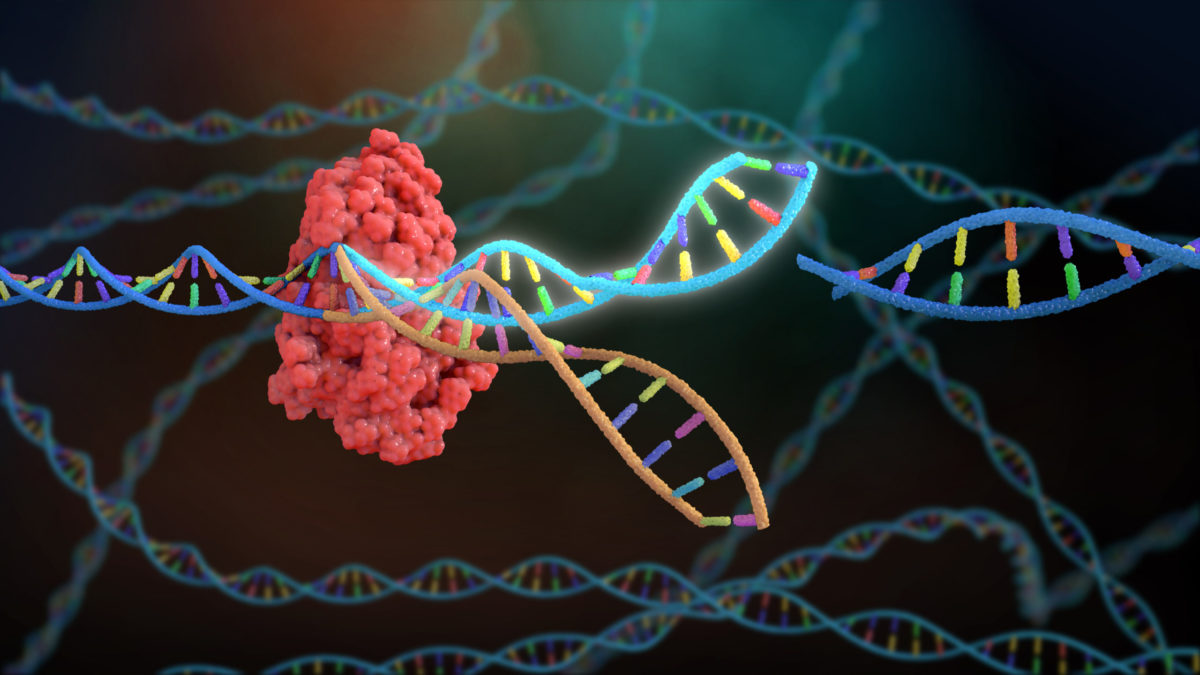
At a fundamental level, clustered regularly interspaced short palindromic repeats (CRISPR) systems contain a CRISPR-associated (Cas) protein and a short guiding RNA sequence that directs the Cas protein to make a cut at a precise genetic location. That cut allows for the editing of a cell’s DNA, which is then repaired by cellular machinery.
Developing a gene editing therapeutic is a uniquely complex endeavor, compared to traditional medicine. The selection of an appropriate target site in the disease-causing gene, the gene editor, the delivery mechanism, any genome-editing enhancers, and more must be considered with respect to each mutation; any one change drastically shifts the therapeutic’s safety and efficacy. That complexity has made CRISPR medicine expensive, slow, and uncertain to develop. Even after years of investment, much of the field remains far from clinical application.
Five core challenges now shape the future of CRISPR: technical limitations, patient safety concerns, regulatory barriers, industry-wide instability, and reimbursement uncertainty.
Issue One: Technical Limitations
The Challenge:
Despite major scientific and financial investment, practical barriers in CRISPR have delayed the transition of promising laboratory science to scalable therapies. Genetic heterogeneity (when a single disease arises from different mutations across a patient population) demands added time and funding to generate multiple therapuetics for a single disease. Therapies targeting multiple mutations at once or targeted replacement of whole genes remain presently unworkable. Further, it is much easier to delete DNA using CRISPR than to replace it with functioning code. Taken together, clinical application of CRISPR is largely limited to a narrow set of monogenetic diseases.
Delivering the CRISPR components into the affected tissue also poses significant challenges. Currently, most clinical trials underway target blood-based diseases where stem cells can be removed from the body, edited ex vivo, and reinfused into the patient. By contrast, CRISPR systems targeting other tissues suffer major setbacks. The field is already abandoning more ambitious efforts to edit brain or muscle cells.
What’s Moving:
In December 2023, the FDA approved the first CRISPR therapeutic, exa-cel (brand name Casgevy), which targets the single mutation responsible for both sickle-cell disease and beta-thalassemia. Researchers are also developing new editors, delivery systems, and supporting technologies that may improve future CRISPR performance.
What’s Missing:
Uncertainty remains on the clinical translatability of emerging CRISPR systems. That concern is underscored by the fact that exa-cel has reached exceedingly few patients since receiving FDA approval, likely due to its lengthy manufacturing and delivery process.
Issue Two: Patient Safety
The Challenge:
CRISPR can generate unintended edits (referred to as off-targeting) or induce larger structural variations (insertions, deletions, or chromosomal rearrangements) to the genome.
While the risk of such alterations is small, any mutation presents extreme risk to a patient, especially if the mutation proves cancerous.
Additionally, the delivery vector or the CRISPR components themselves can be toxic or deadly, especially at high doses or expression levels. In some cases, CRISPR editing may also trigger an immune response.
What’s Moving:
Screening for off-targeting is required for FDA approval, and the integration of AI into CRISPR design protocols may help predict off-targeting and propose mitigation strategies. Innovations in gene editing, including next-generation editors (like base editors and prime editors) also reduce mutagenesis risk.
What’s Missing:
There is no gold standard for how many tools, assays, or validation steps are necessary to establish that a CRISPR therapy is adequately safe. Nor is there a single assay capable of accurately screening for all possible structural variants in edited cells. In practice, that means inconsistent safety evaluations. For instance, a recent study found that exa-cel may cause off-target edits in certain patients with genetic variants not included in product’s safety assessment, which relied on only in silico (computer) prediction and one empirical assay to look identify off-targeting.
Issue Three: Regulatory Approval
The Challenge:
Each individual therapy must meet the evidentiary requirements of the FDA. For many rare or ultrarare diseases, that added time and cost makes potentially life-saving therapies untenable.
What’s Moving:
Historically, the FDA levied expanded access to allow certain patients to receive therapies still under review. However, FDA leaders recently floated a plausible mechanism pathway, under which similar therapies may be generally approved under a single “platform” when traditional randomized trials are infeasible.
What’s Missing:
The introduction of the proposed pathway requires formal regulatory process. Additionally, crucial questions remain open, including the scope of what constitutes a platform and whether the pathway fits within the FDA’s existing statutory authority.
Issue Four: Industry Downturn
The Challenge:
As timelines lengthen and technical uncertainty persists, investors are reassessing their valuation of the industry, forcing gene-editing companies to narrow pipelines, size down, or pivot.
What’s Moving:
Some companies are maintaining encouraging momentum, and the possibility of a more flexible approval pathway could improve investor confidence.
What’s Missing:
Much of the cost and risk of early-stage development remains concentrated in small biotech firms, with larger pharmaceutical companies appearing cautious to further invest in the nascent field.
Issue Five: Reimbursement Concerns
The Challenge:
Gene-editing products are likely to be among the most expensive medicines on the market, given that sponsors seek to recoup enormous research, manufacturing, and rollout costs. For instance, exa-cel has an eye-catching list price of $2.2 million per patient.
What’s Moving:
Some commercial payors, including private employer health plans, are seeking out risk-sharing payment models to finance costly therapies like exa-cel. The CMS Innovation Center is likewise negotiating with exa-cel’s sponsors to enter into outcome-based agreements with state Medicaid programs.
What’s Missing:
General uncertainty remains over how private and public health insurers will finance CRISPR therapies. Reimbursement is even more tenuous for therapies approved with particularly weak clinical evidence, such as under the plausible mechanism pathway.
Conclusion
CRISPR remains one of the most difficult frontiers in modern biotechnology. As the field continues to stumble over technical, regulatory, and financial roadblocks, the remarkable technology risks never realizing the full extent of its clinical applicability.