
Making Argentina Less Safe: The Human Rights Consequences of Leaving WHO
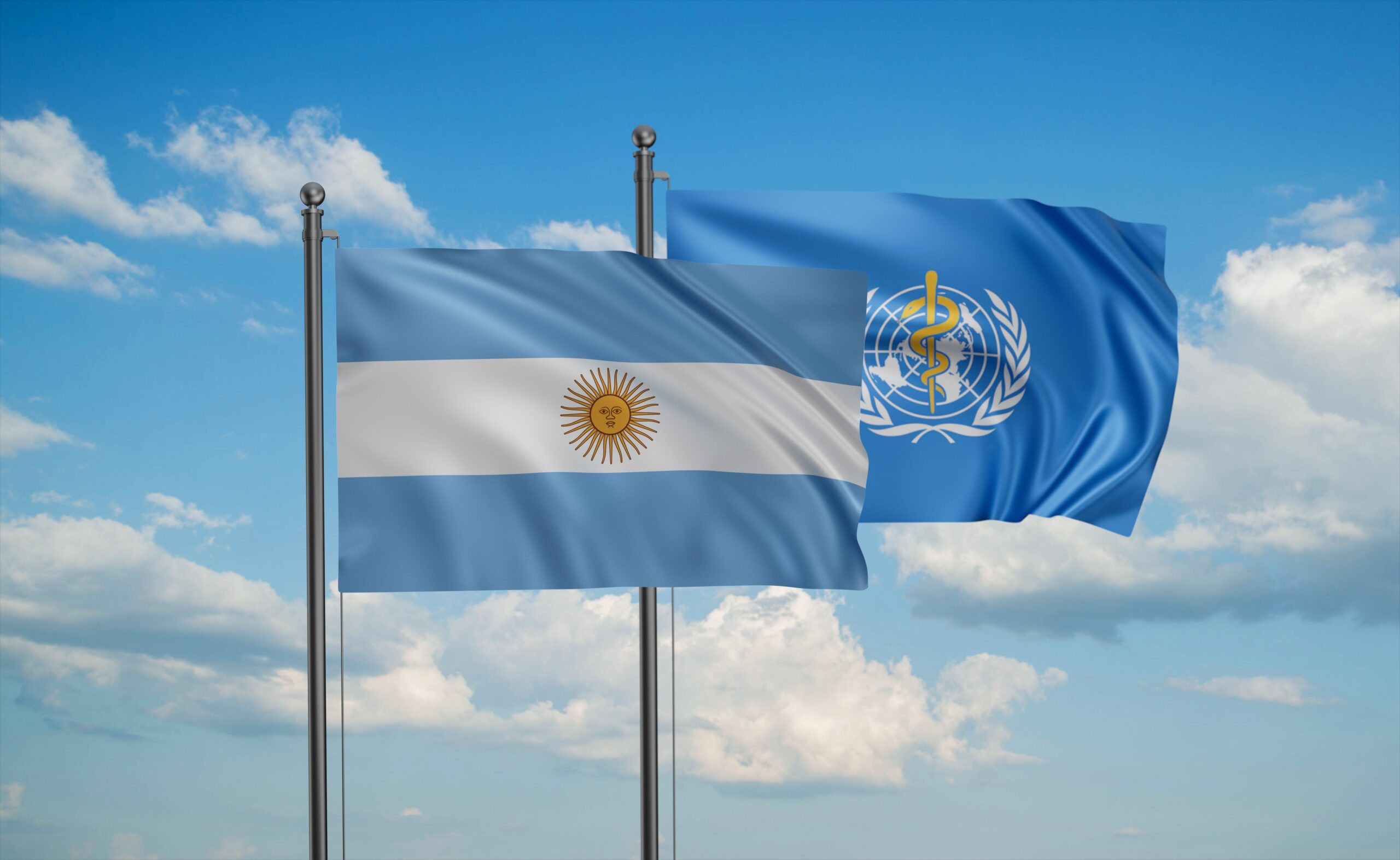
On May 22, 2026, the World Health Assembly formally acknowledged Argentina’s withdrawal from the World Health Organization (WHO), consolidating a process that has now placed the country among the very few states to abandon the principal institution of global health governance.
Published
Author
Share
On May 22, 2026, the World Health Assembly formally acknowledged Argentina’s withdrawal from the World Health Organization (WHO), consolidating a process that has now placed the country among the very few states to abandon the principal institution of global health governance.
Argentina’s withdrawal from WHO did not emerge in a vacuum. Following in the footsteps of U.S. President Donald Trump, President Javier Milei announced last year that Argentina would leave the WHO. Established in the aftermath of World War II, the WHO serves as the principal institution coordinating international efforts to monitor, prevent, and respond to global health threats, pandemics or diseases of importance. Both leaders have demonstrated a common hostility toward multilateral institutions, global health governance, and scientific expertise more broadly. Since taking office in December 2023, the Milei administration has systematically sought to delegitimize expert knowledge, public universities, and scientific institutions — including Argentina’s National Scientific and Technical Research Council (CONICET) — by portraying them as ideological actors detached from “ordinary people” and national interest.
Global health resists simplistic arguments based on sovereignty. It depends upon cooperation and coordination, as both the recent Hantavirus outbreak that originated in Argentina and the Ebola outbreak that is currently outpacing containment demonstrate. As Tedros Adhanom Ghebreyesus, Director-General of WHO, warned in response to the Argentine withdrawal, “Viruses don’t care about our politics, they don’t care about our borders, and they don’t care about all the excuses that we may have.”
If it is counterproductive and dangerous for the United States to abandon WHO, Milei’s decision ignores the profound asymmetries between the two countries in terms of scientific infrastructure, technological capacity, and institutional resources. Unlike the United States, Argentina is far more dependent upon multilateral cooperation frameworks and lacks the economic and institutional capacity to compensate the technical assistance. The asymmetry becomes more evident when considering the financial dimension of the WHO system. According to WHO funding data updated to December 2025, the United States contributed US$751.5 million while Argentina contributed US$8.3 million. Thus, for Argentina the financial cost of remaining within the WHO framework was relatively modest. Nevertheless, the country has historically reaped significant benefits from its participation in the WHO system, including access to technical expertise, scientific information, epidemiological surveillance networks, coordinated responses to health emergencies, vaccination strategies, and regional cooperation programs. The potential loss of these mechanisms has been identified by several observers as one of the principal costs associated with withdrawal.
Rather than a merely domestic policy, Argentina’s withdrawal from WHO only becomes intelligible when situated within a broader rationality of authoritarian neoliberalism and the transnational circulation of conservative nationalist strategies.
Looking for Sovereignty in the Wrong Places
The principal justification invoked by the Argentine government for withdrawing from WHO was the defense of national sovereignty. According to Health Minister Mario Lugones, Argentina would now be free to recover its capacity to define public health policies without interference from international organizations and prioritize the health of Argentines according to its own national interests.
Yet the appeal to sovereignty reveals several contradictions.
- First, WHO’s recommendations operate primarily through voluntary cooperation, scientific coordination, technical assistance, and multilateral consensus. For Argentina, participation in WHO does not undermine substantially its autonomy in matters of public health policies, while withdrawal risks sacrificing fundamental forms of international cooperation and institutional support that may be difficult to replace (despite remaining within the Pan American Health Organization).
- Second, democratic sovereignty is exercised through the legislature, not just presidential decrees. Argentina joined WHO in 1948 through congressional legislation during the presidency of Juan Domingo Perón, leading many NGOS and jurists to argue that abandoning the organization would likewise require parliamentary approval. However, the decision to withdraw was made unilaterally by the executive branch, bypassing the institution that most directly embodies popular sovereignty within democratic system: Congress. Nor was any popular consultation ever considered. The paradox is evident: A decision presented as an affirmation of national sovereignty ultimately rests upon the marginalization of democratic deliberation and representative institutions.
- Third, Milei’s government has embraced whatever dictates may come from the IMF and the U.S. government and other other creditors, including by steamrolling over national legislation and national sovereignty. The chainsaw — the central symbol of Javier Milei’s political movement— epitomizes the central dogma of authoritarian neoliberalism: All social protections including health care and social determinants of health are subject to sacrifice in the altar of market rationality and fiscal discipline imposed by global institutions. Never mind the continual protests of citizens who are affected, the strikes at hospitals, the lawsuits against the cuts. Sovereignty concerns are nowhere to be found.
Human Consequences of the Politics of Abandonment
The consequences of withdrawal from WHO are not merely diplomatic disruption or institutional weakening. They are profoundly human. The effects may be especially severe for programs addressing HIV, tuberculosis, vaccination, and maternal-child health, many of which rely upon international patronships coordinated within the WHO system. The risks may become even more serious in the context of a future pandemic, where preparedness, international coordination, and access to vaccines are of vital importance.
The Milei administration’s hostility toward global health and science more generally performs an important function within his authoritarian neoliberalism. By weakening the legitimacy of scientific expertise and the kind of evidence-based policymaking reflected in WHO, the government creates conditions for arbitrary forms of decision-making (a form of “public health flat-earthism”) while simultaneously eroding democratic accountability. What it ultimately calls into question is not only the authority of a particular institution such as the WHO, but the very idea that public policy should be based on scientific evidence, institutional knowledge, and universal principles of human rights.
From a human rights perspective, those most vulnerable and dependent upon public health care systems, vaccination programs, international cooperation, and social protections become disproportionately exposed to abandonment, precarity, and preventable suffering. As Harvard Law School Professor Alicia Ely Yamin and I wrote in a book published last year, taken together, these politics enact a form of necropolitical experimentation in which the erosion of public health systems transform death not into a collateral effect but into a modality of governance.
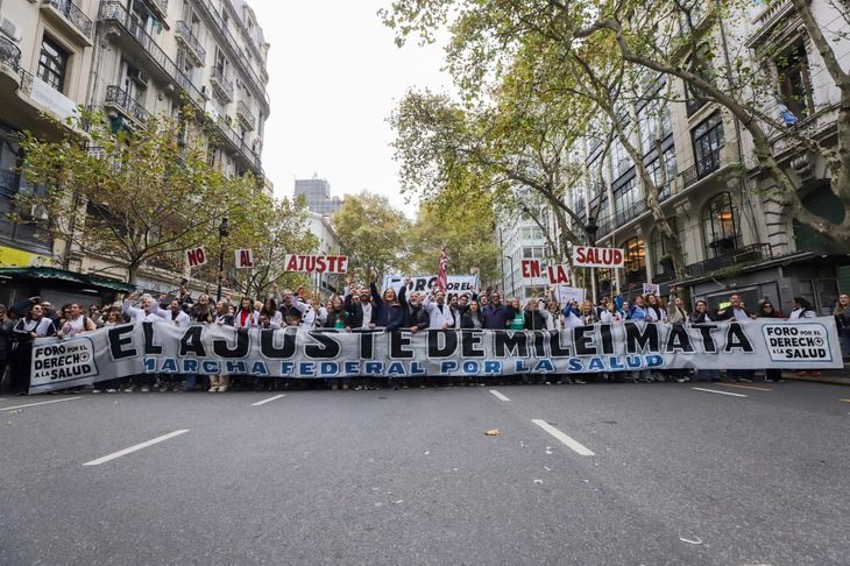
Argentina has made history in overcoming brutally oppressive regimes and there is reason for hope that the country will change course again to re-embrace human rights. The Milei administration’s neoliberal policies have engendered powerful forms of social resistance. In the very same week that the Argentine government formalized its withdrawal from WHO, tens of thousands mobilized across the country during the Federal March in Defense of Public Health under the slogan “Milei’s austerity kills,” denouncing the dismantling of the healthcare system and defending health as a human right. These mobilizations echoed the massive demonstrations previously organized in defense of public universities and scientific institutions. Far from passively accepting the erosion of public institutions, significant sectors or Argentine civil society continue to resist the authoritarian neoliberal assault on science, education, and public health. As during the struggle against the last dictatorship, the defense of life and human dignity have become once again the main organizing principle of resistance.
About the author

Related Articles
-
 Global Health & Human Rights
Together for Health: How the Inter-American Court Brings Science and Knowledge to the Climate Fight
-
 Global Health & Human Rights
Quantum Computing Export Controls: Implications for the Health Care Sector
-
 Global Health & Human Rights
From Words to Action: Making the Pandemic Agreement Work