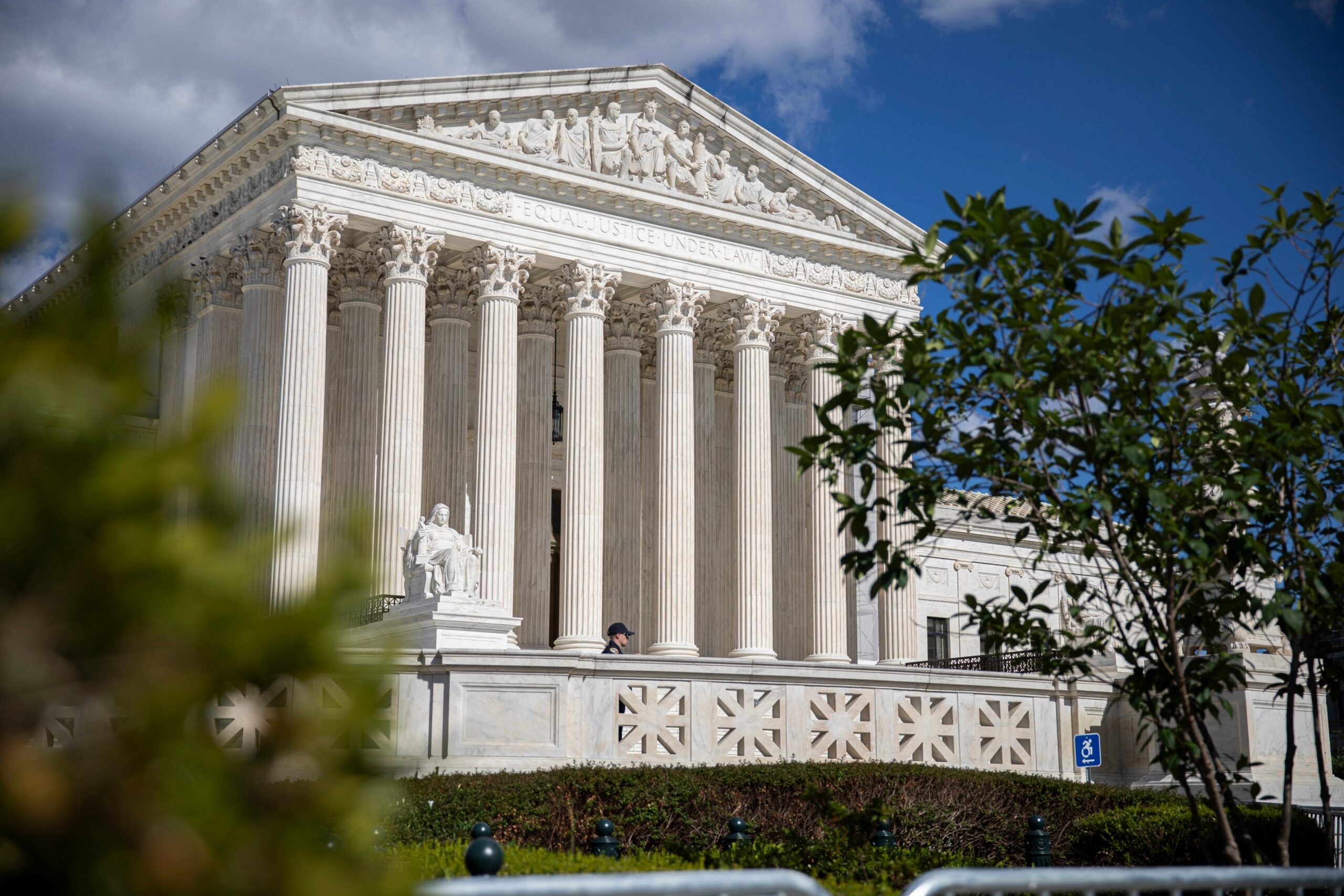
Public Health is Losing in Court: Amicus Briefs Are One Way We’re Fighting Back
In the last several years, notable shifts in Supreme Court jurisprudence have eroded the deference that courts have historically granted to health officials.

Published
Author
Share
In the last several years, notable shifts in Supreme Court jurisprudence have eroded the deference that courts have historically granted to health officials. At the same time, in the face of a federal administration that has sought to undermine public health in multiple ways, litigation has proven to be one critical tool for those seeking to defend public health.
In 2024, Northeastern University’s Center for Health Policy and Law (CHPL) convened 25 participants from various sectors, including lawyers, public health professionals, and advocates to consider the challenges facing public health law in the courts and develop concrete recommendations. One of many goals that emerged was the need to enhance public health’s capacity to file amicus (aka “friend-of-the-court”) briefs to inform courts about the health implications of the litigation before them. To do this, public health needed a more robust capacity to identify and track key cases, and build teams of lawyers, scientific experts, and advocates who could work together to research and write briefs that could inform judges about the public health context and implications of important (but sometimes under-the-radar) cases.
To further this goal, with the support of the Robert Wood Johnson Foundation, in 2025 CHPL and Public Health Law Watch initiated the Amicus Project: Advancing Public Health & Health Equity in the Courts. We track and disseminate information about active litigation impacting public health and collaborate with public health experts and outside counsel to draft and submit amicus briefs, or “friend-of-the-court” briefs, that present the relevant health and scientific context to courts in cases of public health significance.
Amicus briefs often take the form of “Brandeis briefs,” which present scientific and technical data that a party cannot include in their brief — either because of space limitations or because the information goes beyond the scope of the trial record. As a result, amicus briefs can uplift the health significance of the policies at stake, and especially when diverse coalitions participate, signal to a court that a position has broad support, which research suggests may impact judicial outcomes.
Amicus filings at the Supreme Court have climbed roughly 800 percent over the last 80 years, with 250 cases involving an amicus brief between 1946 and 1955, all the way to 940 briefs filed in the 2020 term alone. Justices have increased their citations to amicus briefs: Between 1946 and 1995, the Court referenced an amicus brief in just 28 percent of cases, but by the 2019–2020 term, the citation rate rose to 65 percent with every justice citing a professor-authored brief in at least one of their opinions. In federal district courts, 88 percent of amicus briefs get accepted, and a quarter of those accepted are incorporated into the court’s analyses in cases that reach a decision on the merits. Studies of amicus filings in state courts also suggest amicus participation is on the rise and are having an impact on judicial opinions.
Critically, the use of amicus briefs will likely grow and become more crucial following the Supreme Court’s Loper Bright decision that ended Chevron deference. Courts may no longer assume agencies got the science right but instead must sort through the technicalities themselves. This sweeping change to federal administrative law makes amicus briefs one of the few remaining mechanisms for getting evidence-based public health perspectives and data in front of the courts.
Our three amicus briefs in AAP v. Kennedy, the case challenging the federal government’s overhaul of COVID-19 vaccine guidance, the childhood immunization schedule, and the reconstitution of CDC’s Advisory Committee on Immunization Practices (ACIP) offer a model. In collaboration with scientists at Defend Public Health, public health scholars, and outside counsel, we filed two briefs in the District Court and one before the Court of Appeals.
- In January, District Judge Brian Murphy cited our first brief in his denial of the government’s motion to dismiss – the only amicus referenced in that order.
- In March, after our second brief argued that the government’s report used to support their vaccine schedule changes was scientifically and methodologically flawed, Judge Murphy issued a sweeping preliminary stay, writing that “Plaintiffs and amici have demonstrated that there is a substantial risk to public health absent preliminary relief.”
- Our third brief — focused on the expertise of ACIP and why that expertise matters — was filed in July with the First Circuit, where we’re awaiting the court’s decision.
Amicus briefs are part of a larger public health defense strategy and there is power in bringing scientists, public health law scholars, and experienced litigators together to inform courts. If you’re tracking a state or local case that impacts public health or health equity, if you know an attorney or public health expert willing to work with us, or if you just want to be part of the network we’re building, please fill out this form (password: amicus). Together we can fight to demonstrate how critical the field of public health is and ensure it continues to protect our communities.