
Community Organizations Can Reduce the Privacy Impacts of Surveillance During COVID-19
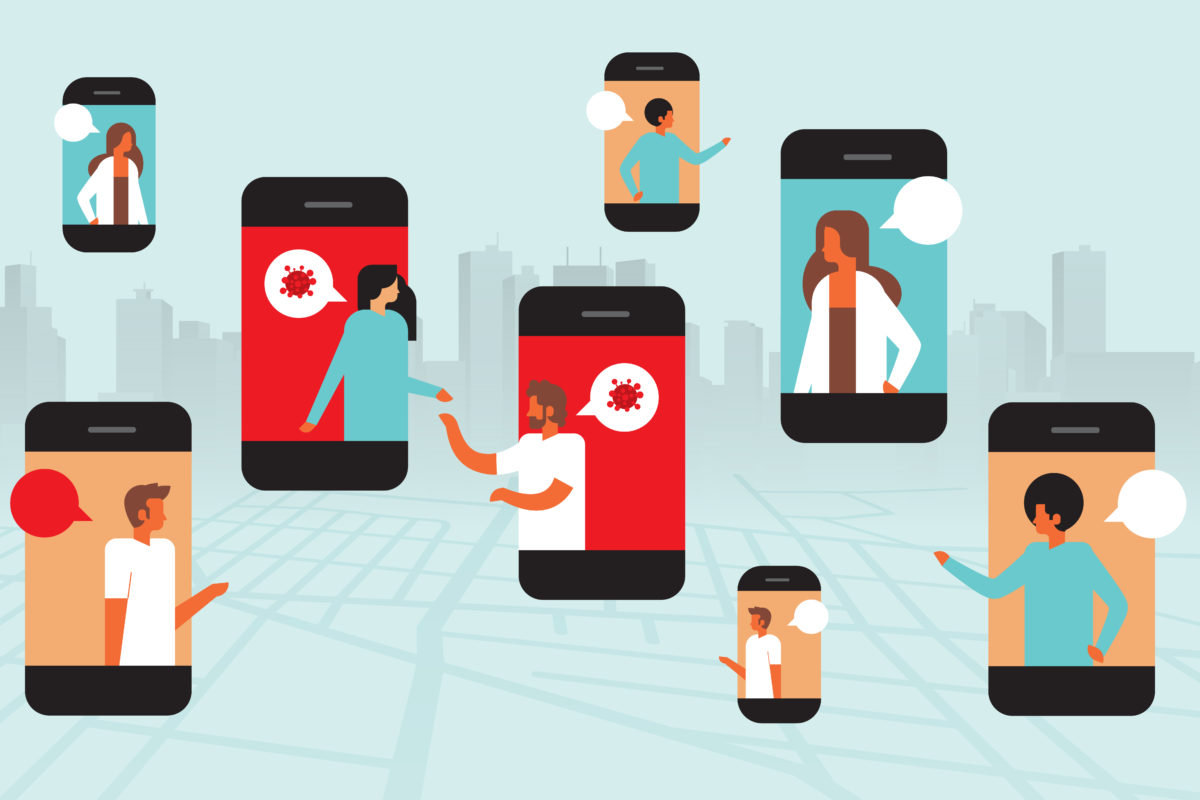
Until there is a vaccine or treatment for COVID-19, our economy and privacy will be at the mercy of imperfect technology used in the pandemic response.
Until there is a vaccine or treatment for COVID-19, our economy and privacy will be at the mercy of imperfect technology used in the pandemic response.
Even if counterintuitive, mandatory private-by-design digital contact tracing is the only ethical option for fighting COVID-19.

By Cansu Canca As coronavirus cases increase worldwide, institutions keep their communities informed with frequent updates—but only up to a point. They share minimal information such as number of cases, but omit the names of individuals and identifying information. Many institutions are legally obligated to protect individual privacy, but is this prohibition of transparency ethically…

By Leslie Francis A recent unpublished decision of the Minnesota Court of Appeals brings the perils of sectoral privacy law into sharp focus: Furlow v. Madonna Summit of Byron, 2020 WL 413356 (Minn. App. 2020) (unpublished). Minnesota protects patient health records but not, apparently, photographs of patients posted on social media by health care facility…

By Adrian Gropper The October 22 announcement starts with: “U.S. Sens. Mark R. Warner (D-VA), Josh Hawley (R-MO) and Richard Blumenthal (D-CT) will introduce the Augmenting Compatibility and Competition by Enabling Service Switching (ACCESS) Act, bipartisan legislation that will encourage market-based competition to dominant social media platforms by requiring the largest companies to make user…

By Marcelo Corrales Compagnucci, Janos Meszaros & Timo Minssen This post is the second part in a two-part series about nudge theory, health data, and the U.K.’s National Data Opt-out System. You can read the first part here. Governments are always actively trying to improve their health care systems, and the secondary use of health…
Emergency Departments, through no fault of their own, are becoming holding cells for patients who are both vulnerable and often marginalized.

Alongside the growth of electronic health records, specialized add-on software capacities have also emerged, some of which even ask users “moral” questions. Yet, the importance of these systems is far greater than the problem of patient privacy.

Suicide is a global problem that causes 800,000 deaths per year worldwide. In the United States, suicide rates rose by 25 percent in the past two decades, and suicide now kills 45,000 Americans each year, which is more than auto accidents or homicides. Traditional methods of predicting suicide, such as questionnaires administered by doctors, are…

By Mason Marks and Tiffany Li An earlier version of this article was published in STAT. The National Institutes of Health wants your DNA, and the DNA of one million other Americans, for an ambitious project called All of Us. Its goal — to “uncover paths toward delivering precision medicine” — is a good one….