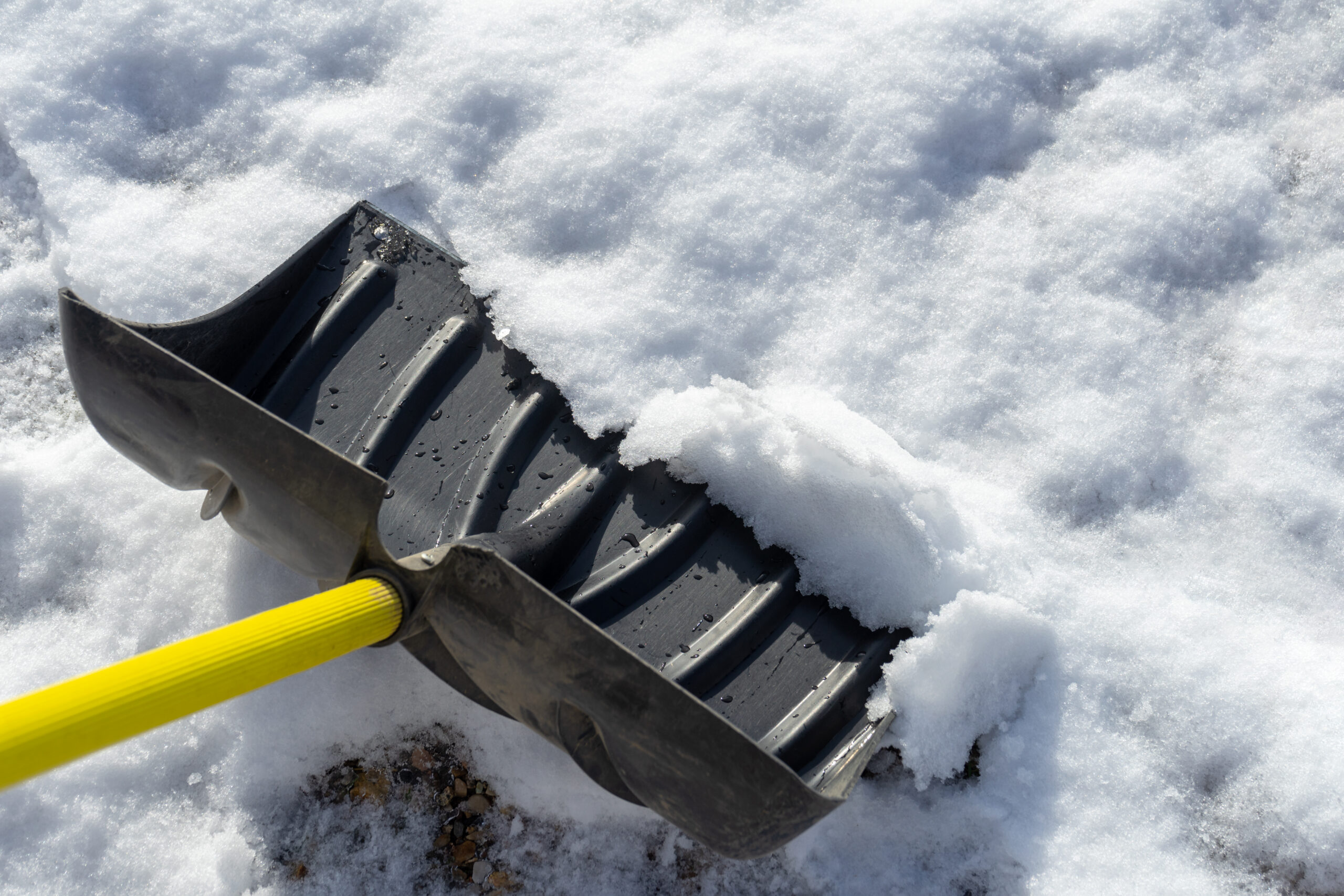
Boston is slowly waking from its snowy slumber. Weeks after one of the snowiest storms in the city’s history, drifts still rise several feet along streets and sidewalks as residents pick their way through narrowed passages and over icy curbs.
Boston is slowly waking from its snowy slumber. Weeks after one of the snowiest storms in the city’s history, drifts still rise several feet along streets and sidewalks. Now another big storm approaches and residents can expect, yet again, to pick their way through narrowed passages and over icy curbs. Slick sidewalks are a predictable driver of injury, with fall-related hospital visits spiking in winter. Delayed clearing has prompted residents to ask: Who’s supposed to shovel?
Legally, the answer is clear: In Boston, as in most American cities, the duty to remove snow and ice from public sidewalks rests with the owners or occupants of the abutting property. What feels like a municipal obligation is, by legal design, a private one. Yet that allocation was not inevitable. Sidewalks are public property. So why is their safety a private responsibility?
To understand the answer, it helps to go back to when sidewalks themselves were new. At the turn of the 19th century, Boston’s pedestrians still shared cobblestone streets with carts and livestock. But as the city grew denser and more active, the city began to construct brick and stone footways to separate pedestrians from carriage traffic and impose order on increasingly crowded streets.
That emergence created a governance problem. Once a pedestrian corridor existed, it had to be kept safe. Accumulation of snow and ice made uneven brick treacherous and forced pedestrians back into the roadway. Boston turned to its citizenry for help.
By 1823, the city had adopted a bylaw requiring owners and tenants to clear snow from the sidewalks in front of their property. The Massachusetts Supreme Judicial Court upheld the measure in In re Goddard, 33 Mass. (16 Pick.) 504 (1835), describing the law as “highly salutary and advantageous to the citizens of a populous and closely built city.” Those who enjoyed the advantages of frontage could be required to keep the adjacent public ways safe.
Roughly one-third of outdoor fall-related ED visits in the U.S. in winter are due to snow, ice, or rain. … At the same time, snow shoveling itself accounts for approximately 11,500 injuries each year, including more than 1,600 deaths.
Even as such ordinances became common across the country, courts were confronting a second question. It was one thing to require abutting owners to shovel snow. It was another to decide whether they should be liable when someone slipped. Municipal snow-removal ordinances were typically treated as regulatory measures and did not create a common-law duty to remove accumulated snow and ice from public sidewalks. In fact, at common law, “[t]he primary obligation to maintain sidewalks in a reasonably safe condition is upon the municipality.” Municipalities were permitted to require abutting owners to remove snow, but that delegation did not relieve the city of its underlying duty. Liability could still arise where the owner’s own conduct “interfered with nature,” for example by channeling water onto the sidewalk, but mere failure to shovel did not itself expose the homeowner to damages. This doctrine has created a peculiar hybrid. America’s sidewalks are “sources of private obligation” despite their public character.
That doctrine redistributes risks as well as responsibilities. Roughly one-third of outdoor fall-related ED visits in the U.S. in winter are due to snow, ice, or rain. Requiring sidewalk clearing has a clear injury-prevention, public health logic. At the same time, snow shoveling itself accounts for approximately 11,500 injuries each year, including more than 1,600 deaths. Cities’ approaches to sidewalk snow are decisions on how to allocate winter risk. Ordinary homeowners bear the labor (and injury) costs of clearing snow, but owe no direct duty to pedestrians. Pedestrians, then, bear the brunt of the accident risk from partly unavoidable winter conditions, depending on how strictly municipalities enforce their ordinances.
That equilibrium is not uniform across all types of property owners. Beginning in the late 20th century, some courts drew a distinction between residential and commercial abutters. In New Jersey, for example, the state supreme court held that commercial landowners are liable for sidewalk injuries when they fail to maintain them in good condition, including clearing snow and ice. The rationale was pragmatic: Commercial owners derive benefit from pedestrian traffic and are better positioned to protect the public from accidents. Other states have reached similar conclusions by statute. New York City, for instance, shifts tort liability for most sidewalk injuries from the City to abutting property owners.
In these regimes, the business owner bears not only the burden of clearing but also the financial risk of pedestrian injury. Winter’s risks are no longer spread across pedestrians, municipalities, and abutting owners, but instead concentrated on the commercial actor most clearly tied to the sidewalk’s economic use.
Yet even where liability shifts, municipalities are not entirely off the hook. Under Title II of the Americans with Disabilities Act (ADA), sidewalks are considered part of the municipality’s “services, programs, or activities.” Cities must therefore ensure that sidewalks and curb ramps are accessible to people with disabilities. That obligation extends to maintenance as well as to the initial construction. A curb buried in snow can effectively deny access to individuals who use wheelchairs or other mobility devices.
The ADA’s duty runs to the public entity. Even if a city delegates snow removal to abutting owners, it cannot disclaim its responsibility to maintain accessible routes. In this area, therefore, federal law pulls against the common-law hybrid. Municipalities may compel private labor, and they may limit private tort liability, but they remain accountable for ensuring that sidewalks are usable by all.
Sidewalk law, then, is more than housekeeping or common-law eccentricity. It is also a kind of preventative medicine. Safe, accessible sidewalks redistribute and reduce the risk of winter fall injuries, support mobility for people with disabilities, and enable pedestrians to access work, school, food, and care. Questions about who labors and who bears liability are not just questions of who shovels. They are questions concerning who gets to move safely through the city.
About the author
Tai Dinger
Tai Dinger (JD/PhD 2028) is a law student and a PhD candidate in Health Policy. Before Harvard, he was an engineer at Epic Systems where he focused on leveraging insurance claims data to track population health. At Harvard, Tai explores the intersections of law, economics, and decision sciences, the study of how we [should] make decisions. His research interests include insurance design, disease modeling, and quasi-experimental methods for policy analysis.