Mind-reading neurotech, algorithmic manipulation, and drug relapse: 6 Questions with Javier Mesa
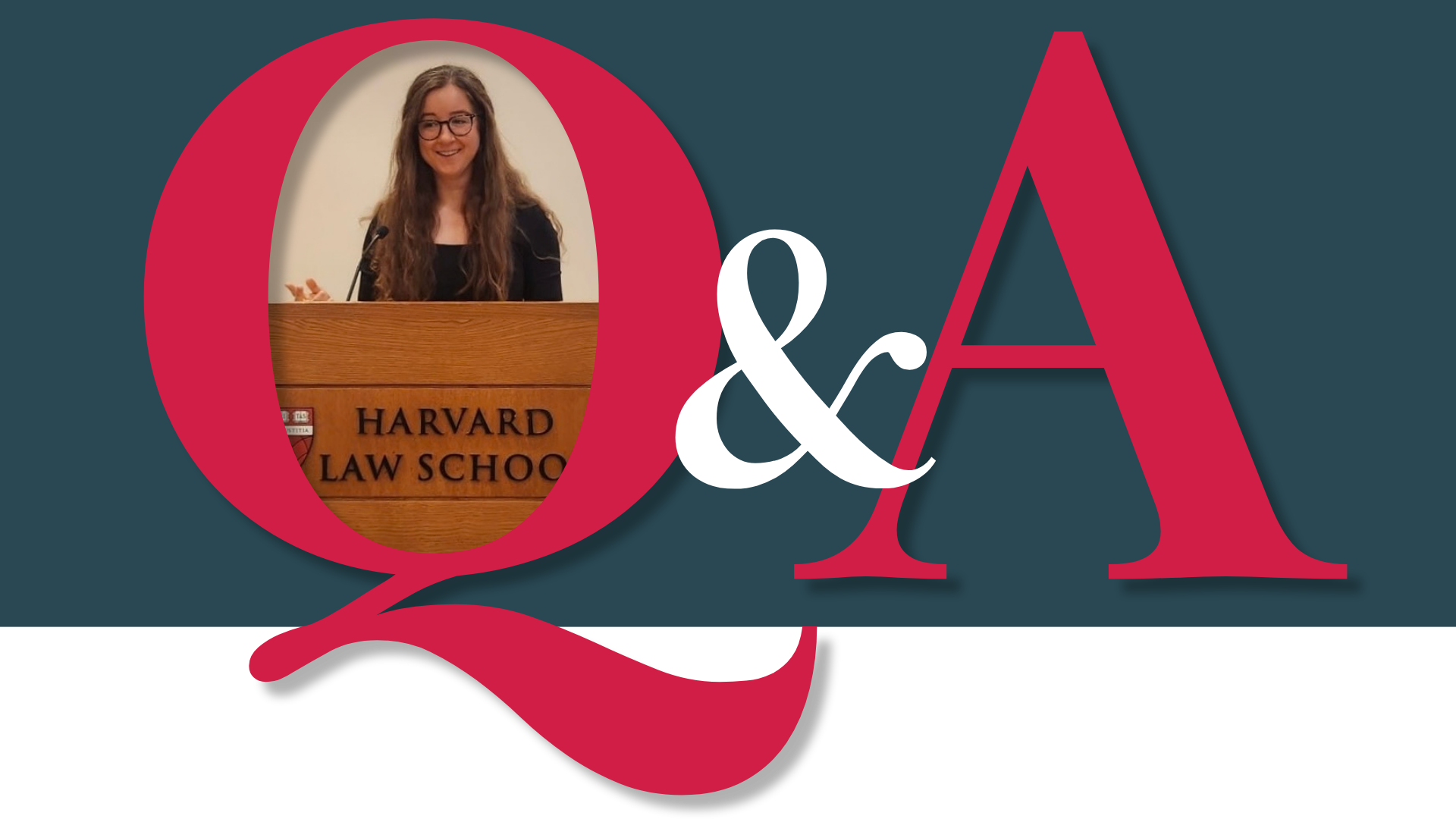
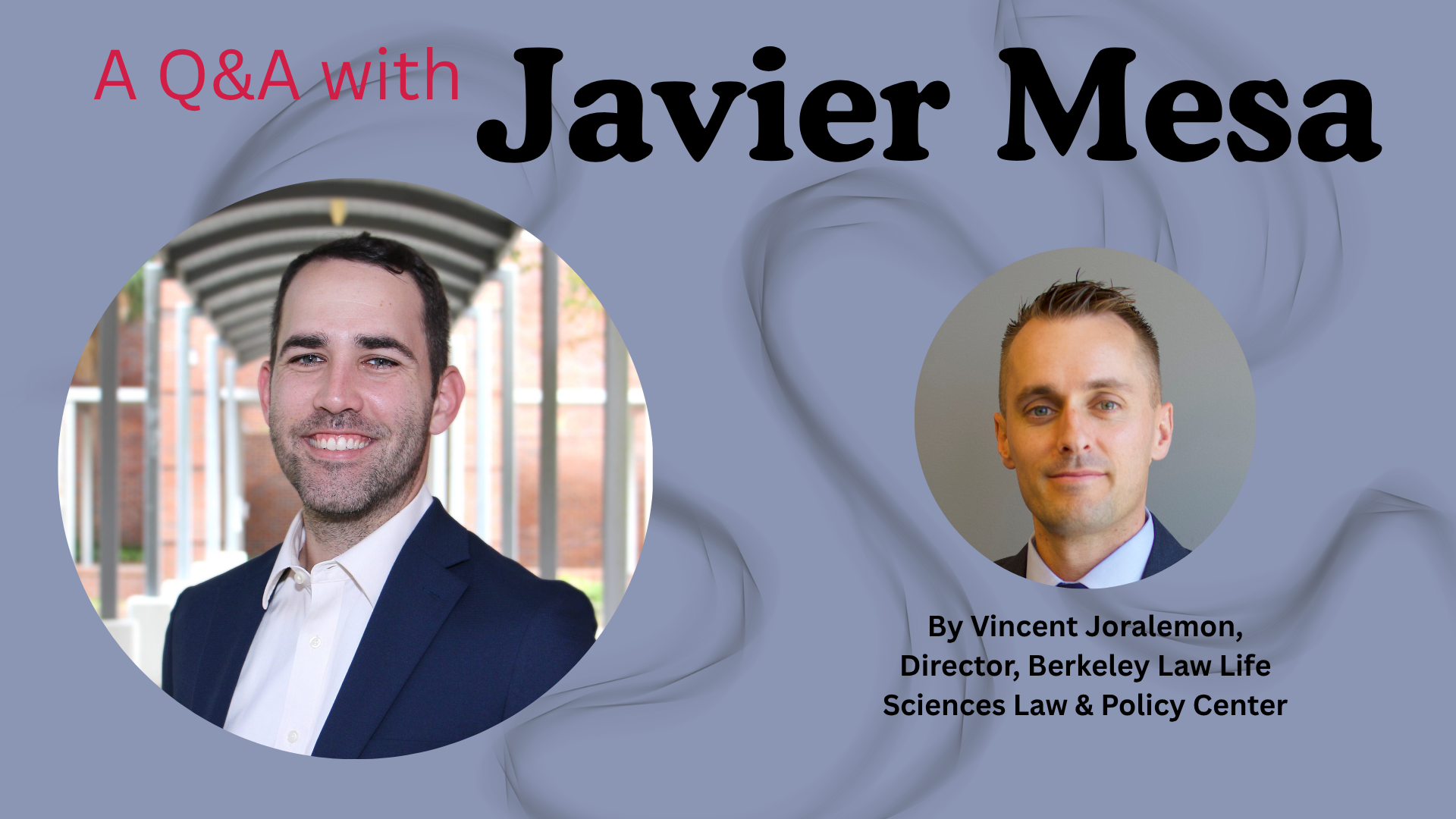
Berkeley Law Life Sciences Law & Policy Center Director Vincent Joralemon recently sat down with Javier R. Mesa, a public defender turned behavioral neuroscientist whose work sits at the intersection of law and neuroscience.
Published
Author
Share
Berkeley Law Life Sciences Law & Policy Center Director Vincent Joralemon recently sat down with Javier R. Mesa, a public defender turned behavioral neuroscientist whose work sits at the intersection of law and neuroscience. Mesa is the Dana Foundation Neurotech Justice Fellow at Harvard Law School’s Petrie-Flom Center and a Research Fellow at the Neurotech Justice Accelerator at Mass General Brigham, where his research focuses on addiction and substance-use policy, the ethics of emerging neurotechnology, and juvenile and young-adult justice. Their conversation covered the promise of brain organoids, why the fear of mind-reading neurotech is overhyped while algorithmic manipulation is the real and present danger, why courts shouldn’t criminalize relapse, and what the wave of social-media addiction litigation shares with the fight against Big Tobacco.
This interview has been edited and condensed from its original recording.
- What’s one underrated idea in life sciences right now?
Organoids. They’ve gotten a fair amount of attention, but I’m surprised more people aren’t fascinated by them. An organoid is essentially a collection of stem cells grown in a controlled environment. Under the right conditions the cells aggregate, connect with one another, and mature — they start to behave, in limited ways, like the organ they resemble. It’s a remarkable model: you can watch tissue develop and see how it responds to stressors in ways that would be hard to measure in a living body.
I’m especially interested in neural organoids, which let us study brain development. They aren’t like our brains — they almost certainly don’t experience consciousness — but they’re powerful: we can study designer drugs and their effects on nervous tissue safely, model pathologies, and introduce genetic modifications to watch how the cells change. The legal and ethical questions — whether these models could ever be conscious, how we treat the stem cells, whether they’re patentable — are harder, and I’d want more training in both science and law before answering them. It’s just something genuinely cool I’ve started poking around in.
- What’s overhyped?
The idea that neurotechnology poses an imminent threat to human volition and cognition. I recently read Nita Farahany’s The Battle for Your Brain(opens in a new tab) — a great book, and a prescient survey of these technologies — but I don’t think the threats to cognitive liberty are around the corner. Brains are complicated, adaptive, and resilient, constantly changing in response to environment, injury, and new information. What we have now in the implantable space is mostly targeted neuromodulation for clinical purposes — one device influencing one region, carefully calibrated, requiring constant feedback from the patient. The science-fiction scenario, where you blast a brain with electrodes and override its natural processes, would run straight into the brain’s own adaptability.
I would prefer to disentangle concerns over cognitive liberty from those involving data privacy. The data-privacy concerns are already here. And the addictive-algorithm problem is already affecting us — that merits far more attention than the fear that someone will use your biometric data to accurately read your thoughts and sell you something.
- What should Congress, the agencies, or the courts be doing that they aren’t?
I’m passionate about how our neurobiological understanding of substance use disorder should inform the law, and one place it’s especially pertinent is criminal law — specifically, how probation handles relapse. I strongly believe we shouldn’t criminalize relapse. Decades of research have taught us that substances of abuse modify a common neurocircuitry, one critical for motivation and long-term decision-making. With chronic use, drug-related cues become far more salient — you attend to them whether you want to or not — natural rewards start to mean less, and your ability to suppress impulsive behavior weakens. Substances produce a cocktail of consequences that can be very hard to fix.
I’m not saying people don’t deserve accountability. I’m saying we should view relapse as a feature of substance use disorder, not an aberration. When I practiced, willfulness was an element of proving a probation violation — you can’t violate probation by accident — and substance use may erode willfulness in ways that may be expressed in the underlying neurobiology. Often, punishing someone for relapse sets them back further than it moves them forward.
There’s also real variety in recovery. Most people who try an addictive substance won’t develop a disorder; some try it once and spiral. John Kelly’s group at Harvard has tried to measure how many times people with recovery success stories have fallen and gotten back on the horse, and for good-faith efforts it can take around five attempts on average — often for people with substantial resources, or recovery capital. I stress that there is tremendous variability though! Punishing someone for falling off the horse almost represents a misunderstanding of the condition itself.
- What book, paper, or case most shaped how you think about this field?
I work at the intersection of law and neuroscience, and I’m interested in how decision-makers — jurors especially, but eventually judges, probation officers, even attorneys — make sense of scientific information in reaching legal decisions. The paper that most shaped me is Joshua Greene and Jonathan Cohen’s For the Law, Neuroscience Changes Nothing and Everything(opens in a new tab).
Their argument is that neuroscience — seen by many as one of the most fundamental ways of explaining behavior — will change how the law understands behavior, but not by showing up in courtrooms or legislatures. It works collaterally, by shifting how people broadly understand behavior and intentionality. If society comes to see behavior as more mechanistic, that’s when courts will change their own approach. It’s more philosophical than empirical, but it resonates with how I see the field.
I’d add one caution that comes out of Deena Weisberg’s work on the “seductive allure(opens in a new tab)“ of neuroscience — that people prefer explanations of behavior more when you add neuroscience, even when it’s logically irrelevant. In a courtroom, that pull is worth resisting, because the brain is staggeringly complex. There’s a quote I keep coming back to, attributed to physicist Emerson M. Pugh: if the human brain were so simple that we could understand it, we would be so simple that we couldn’t.
- You’ve done a lot of addiction work. What’s your take on the wave of addiction litigation starting to emerge?
It’s hard to wrap my head around, but I’ve followed the litigation against some of the social-media companies, and I think we’re at a tipping point. It reminds me of the tobacco litigation — products and marketing that turn out to have deep behavioral implications. These algorithmic patterns are designed to play on vulnerabilities that are inherently human, and I’d like to see top-down policy attention — at least some kind of moratorium — because I think we’ve likely already had real adverse effects on some populations. You see it not just in eating disorders and mood disorders, but in collective political behavior — Cambridge Analytica(opens in a new tab)wasn’t that long ago.
These are efforts to change behavior based on our understanding of neurobiology, and they call for government attention. What that regulation looks like is where the devil is — it’ll be hard to craft something that works without stifling innovation or trampling civil liberties. There’s a real First Amendment tension: it’s very different for me to link to a story and highlight it than to design a program and outsource that decision to the program. I try to keep tabs, but I don’t think we’ll have a clean answer anytime soon — and the problem is only getting worse with time.
- One class, book, or piece of advice you wish you’d paid more attention to?
That it’s okay to fail — in fact, that I should embrace it, because failure is a feature of success. That’s hard to remember when so much of what we see is everyone’s highlight reel on social media. As a trial attorney and public defender, I lost all the time; I was supposed to lose a lot of the time. At the bench, experiments go wrong constantly — sometimes I got almost superstitious about doing everything right and hoping nothing would break.
But if you work at the cutting edge of a field, trying to move it forward, failure is the norm. That’s not a sign you’re on the wrong path — the right path usually includes a lot of downs before you hit an up.