Global Health & Human Rights

  • Read more: Is “Implied Consent” Ethically Permissible in WHO’s Malaria Vaccine Pilot Introduction?

    Is “Implied Consent” Ethically Permissible in WHO’s Malaria Vaccine Pilot Introduction?

    By Beatrice Brown A recent BMJ article has exposed ethical concerns with the informed consent process in the World Health Organization’s (WHO) large, randomized cluster trial of the world’s first licensed malaria vaccine, RTS,S, known as Mosquirix. The study is being conducted in Malawi, Ghana, and Kenya, and 720,000 children will receive the vaccine. The…


    Vials of medications with syringe and needle.
  • Read more: Controlling the Novel Coronavirus: Should we have stopped the COVID-19 coronavirus more effectively? Could we still?

    Controlling the Novel Coronavirus: Should we have stopped the COVID-19 coronavirus more effectively? Could we still?

    By Margaret Battin, Leslie Francis, Jay Jacobson, and Charles Smith What if, instead of closing airports, shutting down trains and buses, quarantining travelers from China, and enclosing 50 million people inside the city of Wuhan and Hubei province, we had a sophisticated technology that could identify travelers who might spread an emerging infectious disease? This…

    Gloved hand holding medical rapid test labeled COVID-19 over sheet of paper listing the test result as negative.
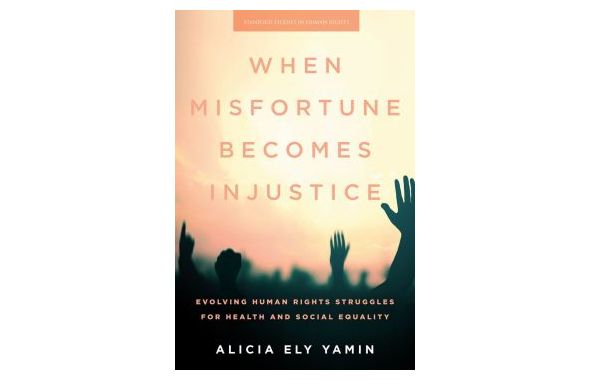
  • Read more: Book Talk: When Misfortune Becomes Injustice: Evolving Human Rights Struggles for Health and Social Equality

    Book Talk: When Misfortune Becomes Injustice: Evolving Human Rights Struggles for Health and Social Equality

    Recording

    Description When Misfortune Becomes Injustice (Stanford University Press, February 2020) surveys the progress and challenges faced in deploying human rights to advance health and social equality over the last thirty years, with a particular focus on women’s health and sexual and reproductive health and rights. Author and Petrie-Flom Center Senior Fellow Alicia Ely Yamin weaves…

  • Read more: Monthly Round-Up of What to Read on Pharma Law and Policy

    Monthly Round-Up of What to Read on Pharma Law and Policy

    By Ameet Sarpatwari, Charlie Lee, Frazer Tessema, and Aaron S. Kesselheim Each month, members of the Program On Regulation, Therapeutics, And Law (PORTAL) review the peer-reviewed medical literature to identify interesting empirical studies, policy analyses, and editorials on health law and policy issues relevant to current or potential future work in the Division. Below are the abstracts/summaries…

    close up of an open book
  • Read more: Targeting Health: How Anti-Immigrant Policies Threaten Our Health & Our Humanity

    Targeting Health: How Anti-Immigrant Policies Threaten Our Health & Our Humanity

    By Patricia Illingworth and Wendy E. Parmet On May 19th of last year, Carlos Gregorio Hernandez Vasquez died of the flu while being held in a cell by U.S. Customs and Border Protection (CBP) in south Texas. He was just 16, a migrant from Guatemala. Hours before his death, when his fever spiked to 103, a nurse suggested that…

    U.S.-Mexico border wall in Texas near a dirt road
  • Read more: Do Pharmaceutical Patents Generate Unique Global Health Duties?

    Do Pharmaceutical Patents Generate Unique Global Health Duties?

    By Govind Persad Imagine a Harvard MBA graduate trying to decide between jobs at Pfizer and at Snapchat. Both are immensely wealthy firms. Many of Pfizer’s products benefit global health. Snapchat’s are at best neutral and may even harm health. Yet many see Pfizer as distinctively culpable for global health deficits. These arguments often depend…

    Researcher works at a lab bench
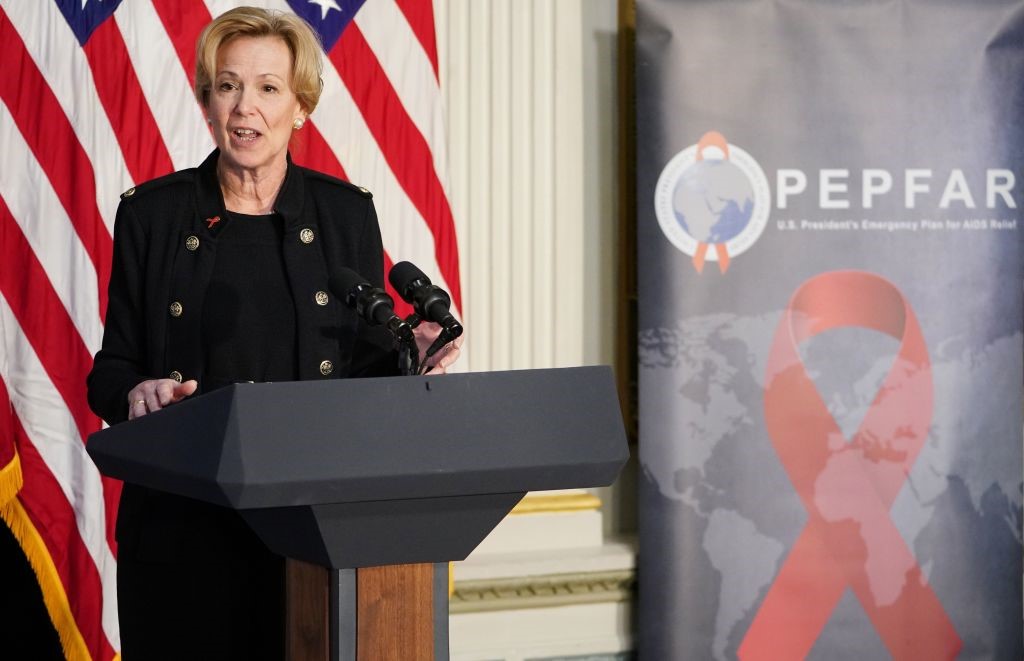
  • Read more: One of the Biggest Public Health Initiatives in History: PEPFAR and HIV

    One of the Biggest Public Health Initiatives in History: PEPFAR and HIV

    By Daniel Aaron In October, the Petrie-Flom Center hosted a conference of world-leading experts in HIV/AIDS to discuss one of the biggest public health successes in history: PEPFAR, the President’s Emergency Plan for AIDS Relief. PEPFAR was launched in 2003 in response to a burgeoning global epidemic of HIV. The program offered $2 billion annually,…

    Ambassador-at-Large Deborah Birx giving a speech from a podium with an American flag and PEPFAR banner in the background
  • Read more: Patient Satisfaction in the NHS in England with the Emergency Room

    Patient Satisfaction in the NHS in England with the Emergency Room

    By John Tingle The Accident and Emergency (A&E), the Emergency Room, is the bellwether NHS speciality from which all the other clinical specialities appear to be judged. Long reported delays and missed targets in the A&E (Emergency Room) lead to a public, media clamoring that the NHS is a failing public service. The independent regulator…

    Wooden figurine of a person leans against a wood wall clock
  • Read more: How to understand the Mexican Supreme Court Decision Regarding Abortion Based on Health Risks

    How to understand the Mexican Supreme Court Decision Regarding Abortion Based on Health Risks

    Friday, October 4, the Petrie-Flom Center will host “Abortion Battles in Mexico and Beyond: The Role of Law and the Courts,” from 8:30 AM to 12:30 PM. This event is free and open to the public, but registration is required.  By Adriana Ortega Ortiz In Mexico, abortion is a state-law matter. It is considered a crime in…

    Female gynecologist talking to female patient while holding a tablet
  • Read more: A 15-year review of the PEPFAR support to Malawi: How Has it Succeeded?

    A 15-year review of the PEPFAR support to Malawi: How Has it Succeeded?

    Monday, October 7, the Petrie-Flom Center is co-sponsoring “15+ Years of PEPFAR: How U.S. Action on HIV/AIDS Has Changed Global Health,” from 8:30 AM to 6:00 PM. The event is free and open to the public, but registration is required. This event is cosponsored by the Harvard Global Health Institute, the Harvard University Center for AIDS Research, the Center for…

    Flag of Malawi blowing in the wind in front of a clear blue sky