How to Make Sense of the Psychedelics Executive Order
For those of us who work in the psychedelic field, the April 18 press conference announcing several actions to speed up psychedelic research was a watershed moment.
For those of us who work in the psychedelic field, the April 18 press conference announcing several actions to speed up psychedelic research was a watershed moment.
Some state laws allow people with serious, life-threatening illnesses to choose when to die. But few jurisdictions allow people to choose how to experience their deaths.

On April 18, 2026, President Donald Trump signed an executive order which he stated would “dramatically accelerate access to new medical research and treatments based on psychedelic drugs.”
The Petrie-Flom Center is pleased to co-host a two-day interdisciplinary conference as part of the Harvard Study of Psychedelics in Society and Culture. The fourth annual Psychedelic Intersections conference will be held at Harvard Divinity School on April 10-11, 2026. Building on the Center for the Study of World Religions’ (CSWR’s) popular conference series, the 2026 conference…

Psilocybin should be regulated under food law rather than drug law. Doing so would serve public health, individual autonomy, and regulatory coherence.

Join our one-hour webinar to discuss possible changes on the horizon in federal drug policy. In late 2025, President Trump signed an Executive Order to expedite the rescheduling of cannabis from Schedule I to Schedule III under the Controlled Substances Act. If finalized, the reclassification would mark a significant policy shift with concrete legal, economic,…
President Trump’s recent executive order directing federal agencies to finalize the rescheduling of cannabis from Schedule I to Schedule III marks a watershed moment in American drug policy.
According to popular accounts, the U.S. Drug Enforcement Administration’s (DEA) scheduling of LSD and other psychedelics in 1968 shut down promising research for decades.

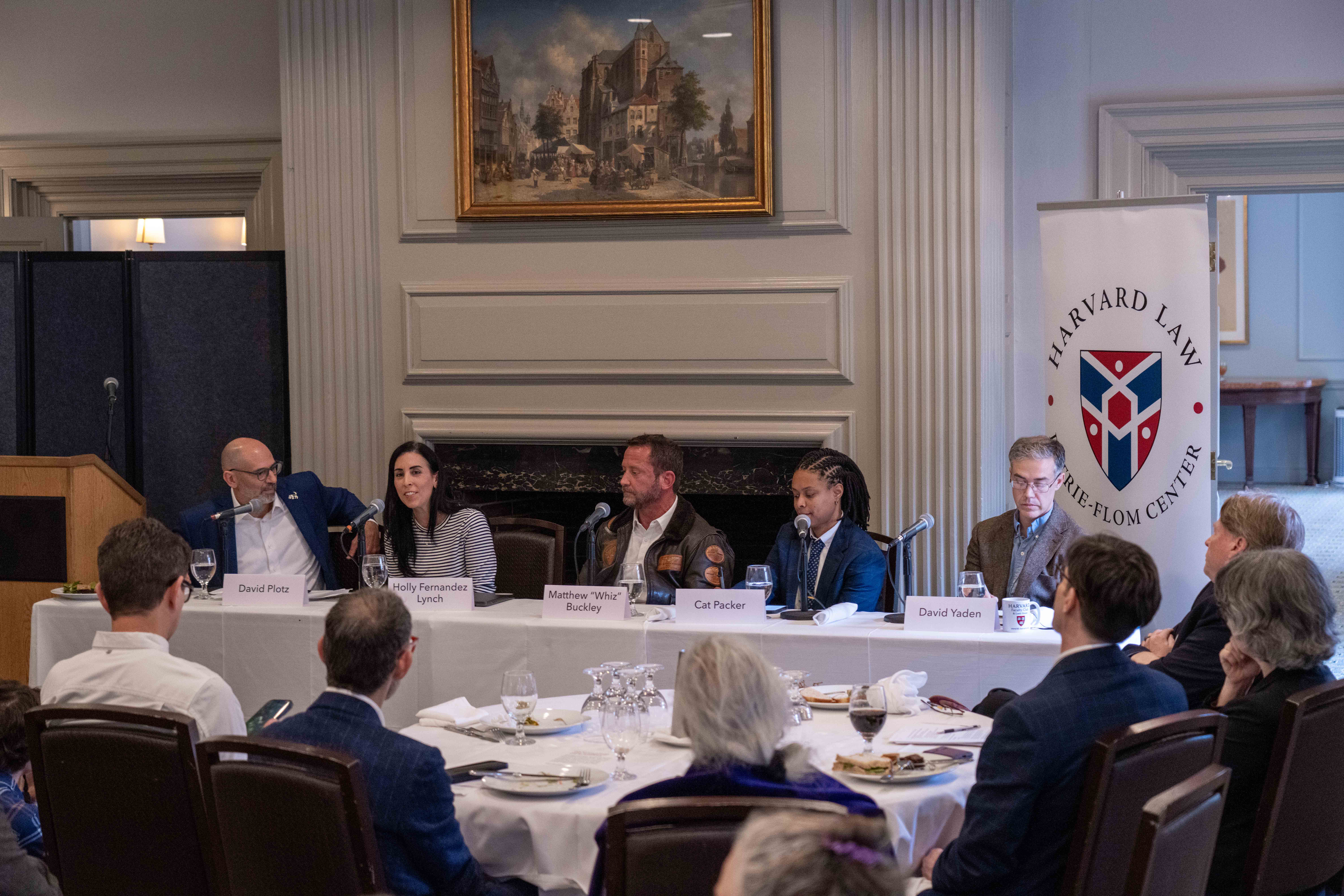
“We’re framing today as a relatively simple debate — perhaps an overly simple one,” began I. Glenn Cohen, Deputy Dean and Professor at Harvard Law School and Faculty Director of the Petrie-Flom Center, as he opened the Center’s recent event, Toward Psychedelics Access: Go Faster or Slower?
Academics and enthusiasts alike often consider the 1960s a “psychedelics golden age” of access, research, and culture.