Is Israel Trading Medical Information for Vaccines? Ethical and Legal Considerations
Israel’s rich health databases are probably the reason why Pfizer agreed to a deal to expedite deliveries of its vaccine.

Israel’s rich health databases are probably the reason why Pfizer agreed to a deal to expedite deliveries of its vaccine.
The CMS final rule requiring price transparency for hospital items and services will begin to remedy the information asymmetry patients face.

An important step toward making health care more equitable will require transferring control of health records to patients and patient groups.

Clinicians should not be obligated to perform these heroic acts, nor should we morally blame them for their decision to refuse to provide care.

By Cansu Canca As coronavirus cases increase worldwide, institutions keep their communities informed with frequent updates—but only up to a point. They share minimal information such as number of cases, but omit the names of individuals and identifying information. Many institutions are legally obligated to protect individual privacy, but is this prohibition of transparency ethically…

By Adriana Krasniansky Interest in artificially intelligent (AI) health care has grown at an astounding pace: the global AI health care market is expected to reach $17.8 billion by 2025 and AI-powered systems are being designed to support medical activities ranging from patient diagnosis and triaging to drug pricing. Yet, as researchers across technology and…

By Phebe Hong Protective orders, confidentiality agreements, and sealed court files significantly impair public access to vitally important records. Recent news coverage highlighting two high-profile drug product liability cases are ongoing examples of how our court system prevents crucial public health information from reaching the public domain.

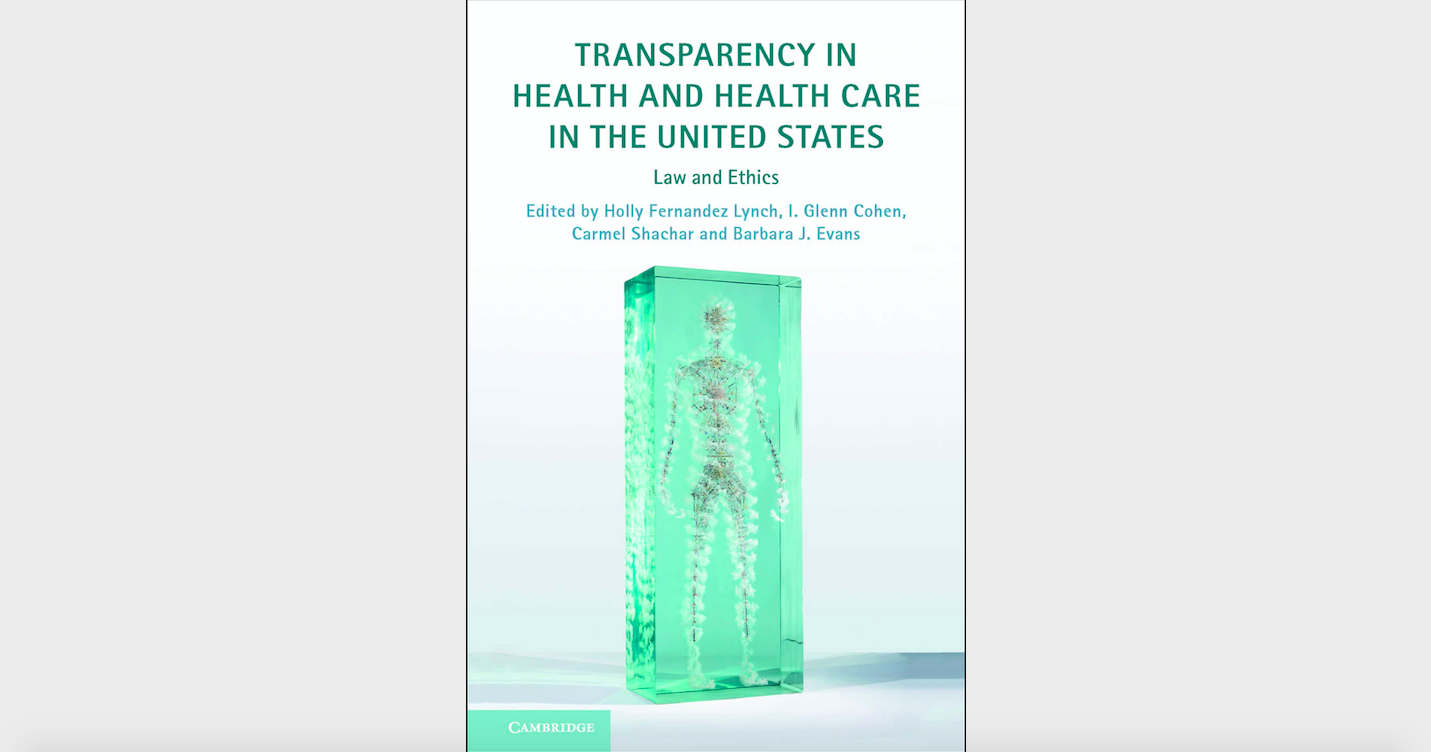
Working at the intersection of law, medicine, ethics, and business, the book goes beyond the buzzwords to the heart of transparency’s transformative potential.