
2026 Annual Conference: Embryo Law and Ethics
This writers-only workshop will be livestreamed for the public.
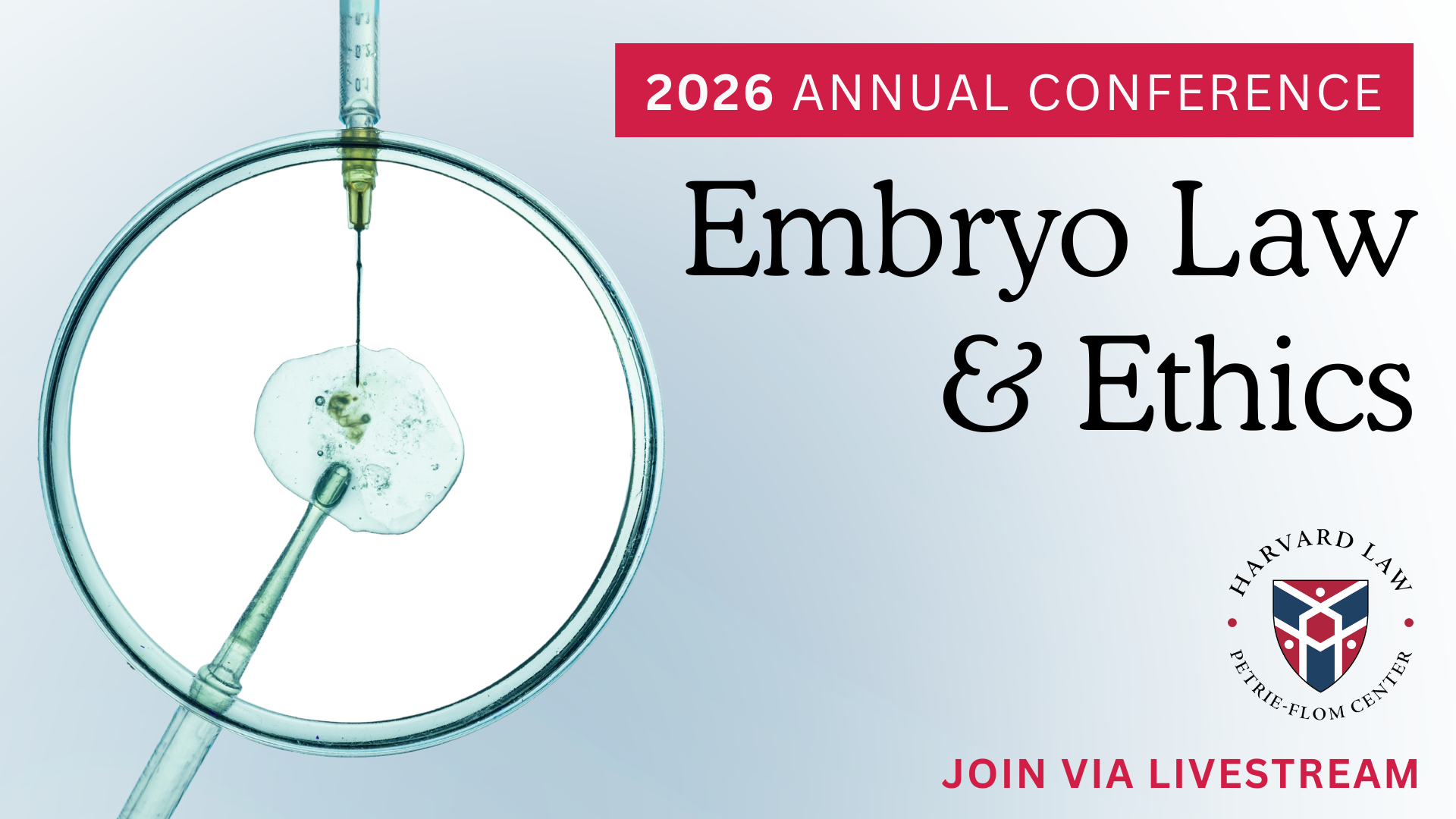
The Petrie-Flom Center for Health Law Policy, Biotechnology, and Bioethics at Harvard Law School is pleased to announce our 2026 Annual Conference: “Embryo Law and Ethics.”
Since the 1980s it has been possible to create human embryos outside of the body and preserve them indefinitely through cryopreservation. With that technology has come major legal and ethical debates about the treatment of these embryos, and the physicians, parents, and donors involved in creating them. For many years, courts have struggled with legal questions relating to the disposition of these embryos and related legislative actions. The United States Supreme Court’s decision in Dobbs v. Jackson Women’s Health Organization in 2022, overturning Roe v. Wade, has resulted in increased interest in the law and policy pertaining to in vitro embryos, including issues concerning the legal personhood of human embryos, liability for their destruction, regulation of the industry, donor and offspring interests, and parental rights and responsibilities.
This conference calls on participants to consider the rapidly changing landscape of embryo law and ethics. At this moment of deep societal debates, we hope to explore collectively the challenges and opportunities of possible paths forward. The conference will seed a book that explores the legal, regulatory, moral, and ethical topics at hand.
This year’s conference is organized by the Petrie-Flom Center’s Faculty Director I. Glenn Cohen and Executive Director Susannah Baruch in collaboration with Judith Daar, the Ambassador Patricia L. Herbold Dean and Professor of Law at Northern Kentucky University Chase College of Law, and O. Carter Snead, the Charles E. Rice Professor of Law and Concurrent Professor of Political Science at the University of Notre Dame.
The conference panels will be livestreamed for the general public.
Recording
Agenda
9-9:15 a.m.
Opening Remarks
I. Glenn Cohen, Petrie-Flom Center Faculty Director, James A. Attwood and Leslie Williams Professor of Law, and Deputy Dean, Harvard Law School
Judith Daar, Ambassador Patricia L. Herbold Dean and Professor of Law, Northern Kentucky University Chase College of Law
O. Carter Snead, Charles E. Rice Professor of Law and Concurrent Professor of Political Science, University of Notre Dame
Susannah Baruch, Executive Director, Petrie-Flom Center for Health Law Policy, Biotechnology, and Bioethics
9:15–10:30 a.m. | panel 1
IVF Past, Present, and Future
The History and Future of IVF
Dov Fox, Herzog Research Professor of Law, University of San Diego
Mary Ziegler, Martin Luther King Jr. Professor of Law at the University of California, Davis School of Law
Protecting Embryos Without Impeding IVF? Empirical Evidence on IVF Regulations and Lessons for U.S. Policy
Xinping Hu, PhD Student, Jurisprudence and Social Policy, U.C. Berkeley
Alice Margaria, Assistant Professor in Law and Reproduction and Co-Director, Interdisciplinary Research Program “Human Reproduction Reloaded,” Faculty of Law, University of Zurich (Switzerland)
Comparative Perspectives on Embryo Genetic Testing—Technological Horizons and Societal Boundaries in the US and Europe
Laura Valtere, Postdoctoral Fellow, Centre for Advanced Studies in Bioscience Innovation Law (CeBIL), University of Copenhagen
Timo Minssen, Professor of Law, University of Copenhagen; Founding Director, Center for Advanced Studies in Bioscience Innovation Law (CeBIL)
The Judicial Creep of “Wrongful Birth”
Yaniv Heled, Professor of Law, Georgia State Law
Liza Vertinsky, Professor of Law, University of Maryland Francis King Carey School of Law
IVF and Justice After Dobbs
Katherine Kraschel, Assistant Professor of Law and Health Sciences, Northeastern University School of Law
Moderator: Susannah Baruch, Executive Director, Petrie-Flom Center for Health Law Policy, Biotechnology, and Bioethics
10:30–11:15 a.m. | panel 2
Embryo Disposition
Meeting the Evolving Challenges for Embryo Disposition in a Post-Dobbs Legal Landscape: Examining the Critical Role of Contract Law Frameworks
Susan L. Crockin, Crockin Law & Policy Group, PLLC; Senior Scholar, Adjunct Professor, The O’Neill Inst. for National and Global Health Law, Georgetown Law Center; Research Assistant Professor, Kennedy Inst. of Ethics, Georgetown University
Francesca E. Nardi, Consultant, Center for Health and Human Rights, O’Neill Institute
Steering Innovation: How Legal Constraints on Embryo Research Can Inform IVF Governance
Vincent Joralemon, Director, Life Sciences Law & Policy Center, Berkeley Center for Law & Technology
Addressing the Problem of Abandoned Frozen Embryos Through Embryo Adoption
Melissa Moschella, Professor of the Practice, Philosophy, McGrath Institute for Church Life, University of Notre Dame
Moderator: Judith Daar, Dean and Professor of Law, Northern Kentucky University Salmon P. Chase College of Law
11:15–11:30 a.m.
Break
11:30–12:30 p.m. | PANEL 3
Defining Humans and Persons
What is an Embryo? A Taxonomy of Human Life
Radhika Rao, Professor of Law and Harry & Lillian Hastings Research Chair, UC Law San Francisco
The U.S. Public’s Reaction to Stem Cell-Based Embryo Models (SCBEMs): Predictions and a Research Agenda
John Evans, Professor, Tata Chancellor’s Chair in Social Sciences, Associate Dean of Social Sciences, Co-director, Institute for Practical Ethics, UC San Diego
Embryo Ethics and the Little Red Hen: Personhood v. Progress?
Nancy M. P. King, Emeritus Professor of Social Sciences and Health Policy, Wake Forest University School of Medicine; Wake Forest University Center for Bioethics, Health, and Society
Christine Coughlin, Professor of Law, Wake Forest University School of Law
Equal Dignity: Embryos, Moral Status, and the Law
Francis J. Beckwith, Professor of Philosophy and Church-State Studies, Baylor University
Moderator: O. Carter Snead, Charles E. Rice Professor of Law, Professor of Political Science, University of Notre Dame School of Law
12:30–1:30 p.m.
Lunch
1:30–2:45 p.m. | PANEL 4
New Technology, New Challenges
Algorithms That Choose Life: Examining the Law and Ethics of AI-Selected Embryos (AIVF) through a “True Lifecycle Approach” for AI Governance
Barry Solaiman, Affiliate, Harvard Medical School, Center for Bioethics
Polygenic Risk Scores to Select Embryos: Legal and Ethical Issues
I. Glenn Cohen, Petrie-Flom Center Faculty Director, James A. Attwood and Leslie Williams Professor of Law, and Deputy Dean, Harvard Law School
Neither Person Nor Property: Toward a Technology-Neutral Framework for Embryo Legal Personhood in the Age of Artificial Reproduction
Emma Waters, Policy Analyst, The Heritage Foundation
Human Embryo Research Beyond Earth: Legal and Ethical Considerations
Vasiliki N. Rahimzadeh, Assistant Professor, Center for Medical Ethics and Health Policy, Baylor College of Medicine
Onur Sahin, Baylor College of Medicine
Kristin Kostick-Quenet, Baylor College of Medicine
Amy McGuire, Baylor College of Medicine
Bronwyn Walsh, Baylor College of Medicine
Victor Cole, Singapore Institute of Technology
Gene Editing
Sheila Jasanoff, Pforzheimer Professor of Science and Technology Studies, Harvard Kennedy School
Benjamin J. Hurlbut, Associate Professor, School of Life Sciences, Arizona State University
Kris Saha
Moderator: Susannah Baruch, Executive Director, Petrie-Flom Center for Health Law Policy, Biotechnology, and Bioethics
2:45–3:00 p.m.
Break
3–4:15 p.m. | panel 5
Derived and Synthetic Gametes and Embryos
Artificial Problems: synthesis, embryogenesis and the limits of human life
Benjamin J. Hurlbut, Associate Professor, School of Life Sciences, Arizona State University
Synthetic embryos and gametes; The status of manufactured human embryos in scientific research and the law
Maureen L. Condic, Vice Provost for Ethics, Distinguished Ordinary Professor (ad interim), and University Ombudsman and Mediator, Catholic University of America
IVG in a Post-Dobbs/Skrmetti World: Parentage, Personhood, & Regulation
Sonia Suter, Henry St. George Tucker III Dean’s Research Professor of Law, Kahan Family Research Professor of Law, and Co-Director & Founding Director, Health Law & Policy Program, George Washington University
Naomi Cahn, Justice Anthony M. Kennedy Distinguished Professor of Law, Armistead M. Dobie Professor of Law, and Co-Director, Family Law Center, University of Virginia School of Law
The Aristotelian Philosophy of Artifacts and the Ethics of Synthetic Embryos
Paul Scherz, Our Lady of Guadalupe Professor of Bioethics, Department of Theology Program Chair, ND-IBM Tech Ethics Lab, University of Notre Dame
Rethinking the Moral and Legal Value of Human Stem-cell Based Embryo Models: How Extrinsic Considerations Should Inform Governance
Nienke de Graeff, Associate Professor, Department of Medical Ethics & Health Law, Leiden University Medical Center
Lien De Proost, Postdoctoral researcher, KU Leuven
Megan Munsie, Honorary (Professorial Fellow), Faculty of Medicine, Dentistry and Health Sciences, University of Melbourne Medical School; Group Leader, Stem Cell Ethics & Policy, Murdoch Children’s Research Institute
Ana M. Pereira Daoud, Senior Researcher, Leiden University Medical Center
Moderator: I. Glenn Cohen, Petrie-Flom Center Faculty Director, James A. Attwood and Leslie Williams Professor of Law, and Deputy Dean, Harvard Law School
4:15–5:00 p.m.
Closing
Photos
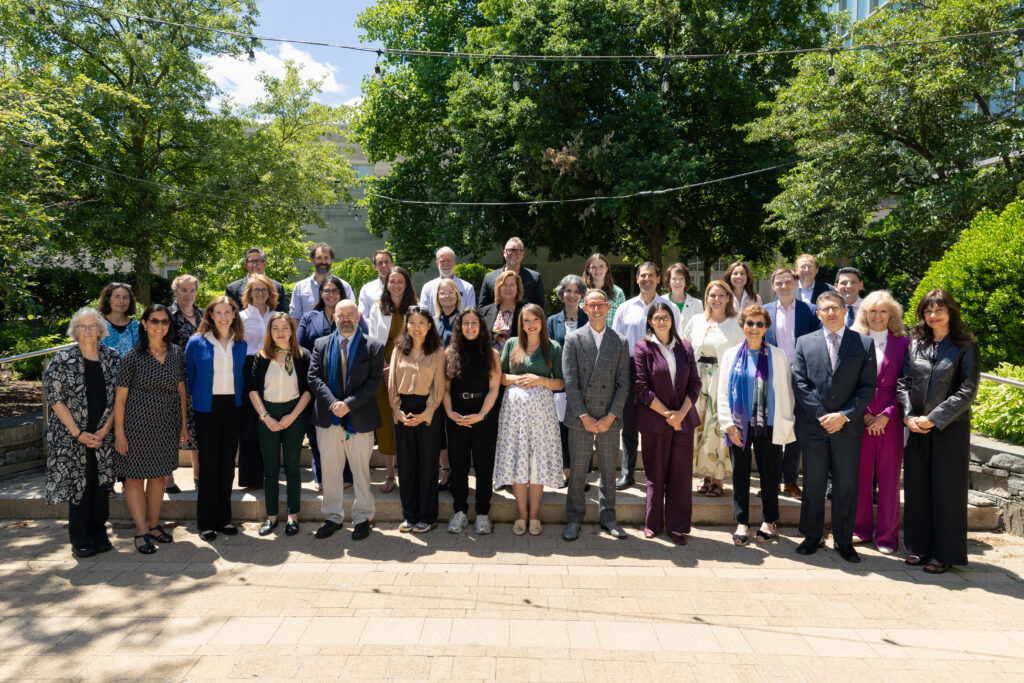
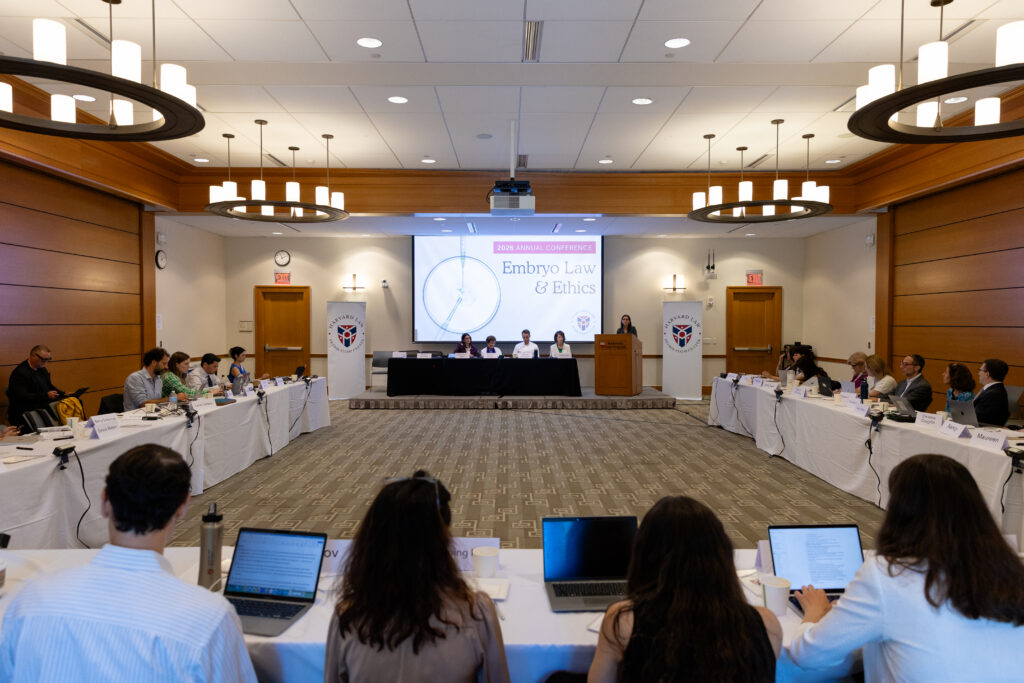
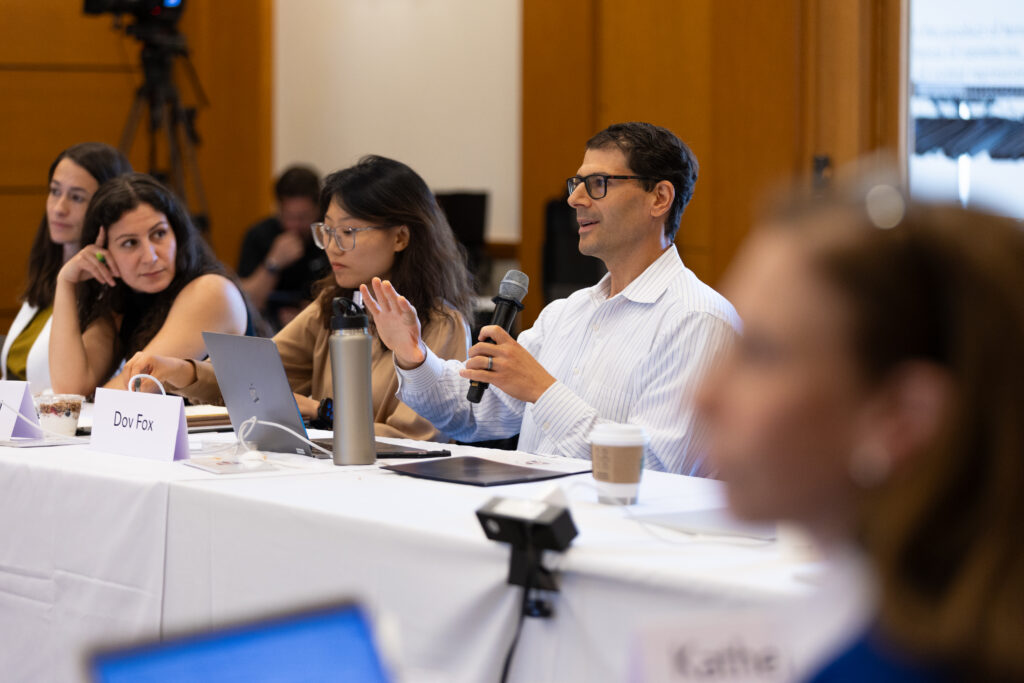
Sponsored by the Petrie-Flom Center for Health Law Policy, Biotechnology, and Bioethics at Harvard Law School with support from the American Society for Reproductive Medicine (ASRM) Center for Policy & Leadership and the Oswald DeN. Cammann Fund at Harvard University.