“Every Person Has a Story”: A Q&A With Law & Applied Neuroscience Senior Fellow Dr. Stephanie Tabashneck
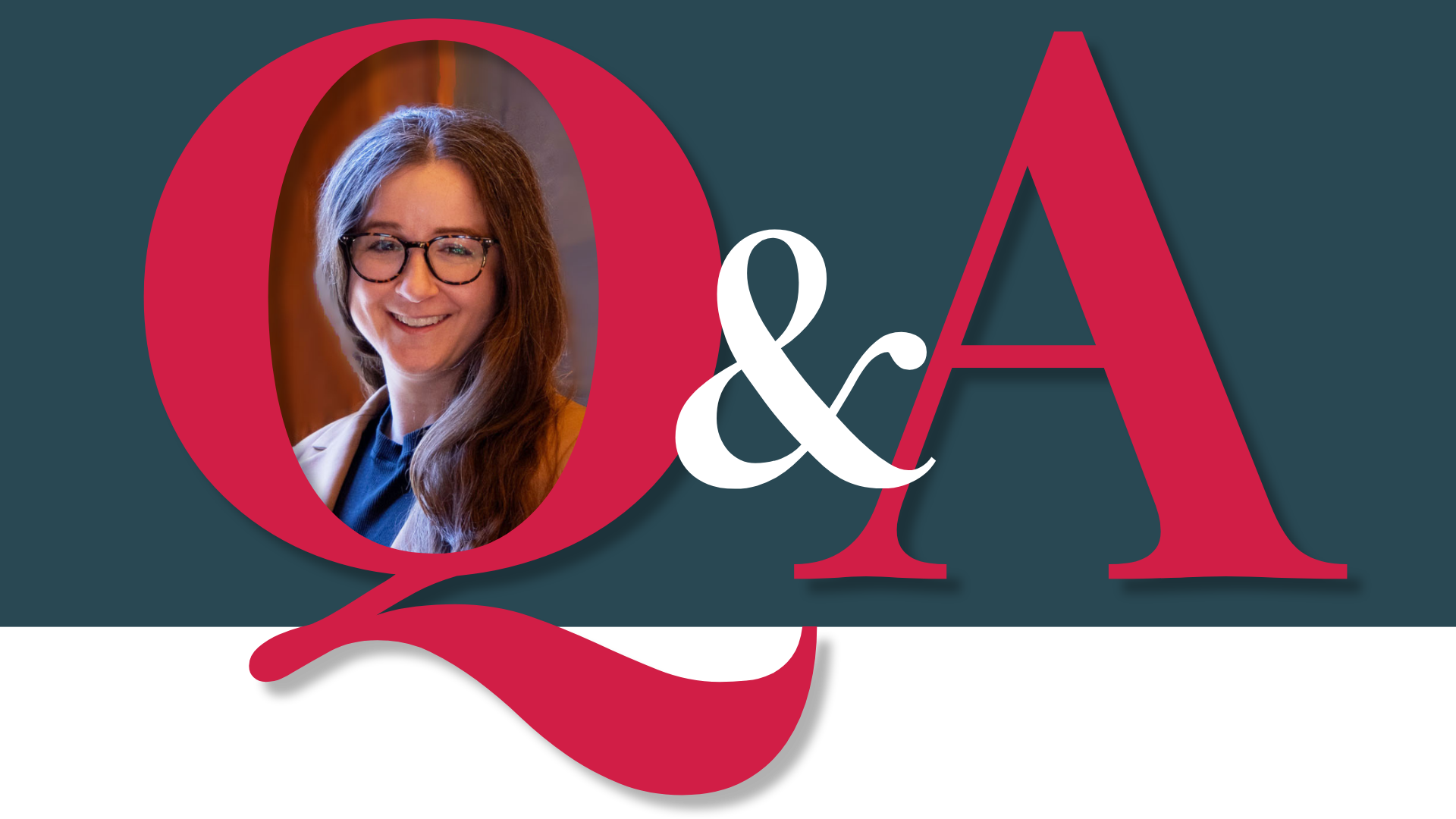
Dr. Stephanie Tabashneck, PsyD, JD, is a Senior Fellow in Law and Applied Neuroscience at the Petrie-Flom Center at Harvard Law School, and Center for Law, Brain and Behavior (CLBB) at Massachusetts General Brigham/Harvard Medical School.
Published
Author
Share
Dr. Stephanie Tabashneck, PsyD, JD, is a Senior Fellow in Law and Applied Neuroscience at the Petrie-Flom Center at Harvard Law School, and Center for Law, Brain and Behavior (CLBB) at Massachusetts General Brigham/Harvard Medical School. A forensic psychologist and an attorney, she conducts forensic evaluations and expert testimony and focuses her research, practice, and teaching on law and neuroscience topics involving children and adolescents and substance use. She is the founding director of the CLBB NeuroLaw Library, which provides free, reliable neuroscience in plain language to help courts and advocates reach fairer, more effective, science-informed decisions.
What does a forensic psychologist contribute to legal proceedings that might be different from the perspective of a lawyer, clinician, or neuroscientist?
A forensic psychologist translates psychological constructs to a legal audience using methods that a clinician or a lawyer may not be able to use because they have education in one field but not the other field.
I think there are a lot of misunderstandings between psychology and law. Often I’ll see lawyers and mental health professionals communicating, and it’s clear that they’re not talking about the same thing because they exist in different contexts. Because our court system is based on outdated and inaccurate conceptions of mental health and human behavior, I think that psychologists have a lot to add to the legal field. They can help courts become more in line with the science instead of relying on outdated myths about human behavior.
Most of the people that are involved in the criminal legal system have had extensive childhood trauma that spans categories: sexual abuse, physical abuse, emotional abuse, community violence, poverty, parental substance use, parental incarceration, lack of access to opportunities.
What’s a recent development in neuroscience that you wish all judges and lawyers knew?
In the last 10 years, there have been developments in neuroimaging. We now know that the brain is wired for addiction at a very young age. For example, we can do brain scans of fetal brains in utero using animal models and predict who is likely to go on to develop an addiction. So we have more knowledge about the genetic and epigenetic contributors to substance use disorder. This could be helpful in courts where addiction is often seen as a moral failure and something that people are actively choosing to do.
What have your clinical and forensic experiences taught you that you might not have learned through academic research alone?
I would say that my work as a forensic psychologist and clinician gives me a unique vantage point into the human aspects of criminal behavior. What I’ve learned is that every person has a story. Most of the people that are involved in the criminal legal system have had extensive childhood trauma that spans categories: sexual abuse, physical abuse, emotional abuse, community violence, poverty, parental substance use, parental incarceration, lack of access to opportunities. Some may be surprised to hear that some of the best people I’ve met are serving long sentences in prison, and they’re not the same person that they were when they went in to prison, often as children.
What are some common misconceptions about the adolescent brain that you encounter in legal or public discussions?
A major one is that courts often think that if a child or adolescent commits a serious crime, that they’re destined for a life of future criminal behavior. But what we know is that’s not supported by the research. For example, in studies looking at juveniles who’ve committed homicide, for those juveniles who got out, their re-offense rate was around 5 percent. So this idea that adolescents turn into super predators as adults is not supported by the research.
Tell us about CLBB and what’s happening there.
The Center for Law Brain and Behavior (CLBB) is a nonprofit affiliated with Mass General Brigham and Harvard Medical School, focused on the intersection of psychology, law, and neuroscience, and helping to bring courts in line with modern science. The CLBB Neurolaw Library is a project I took lead on creating and maintaining along with an awesome team; it’s a library that makes neuroscience accessible to attorneys, judges, and people who are incarcerated, so that they can better advocate for themselves using accurate science. Right now we have four modules: adolescent brain development, addictions, trauma, and memory. We also developed a neurolaw training program for Edovo, which is a tablet provider in jails and prisons across the United States. We have more than 20,000 people who have worked on the neurolaw course who are incarcerated and are learning about how their brains are impacted by trauma and addiction. We’re proud of that.
CLBB also has a young adult diversion program with the Suffolk County District Attorney’s office where we help to support late adolescents who are facing criminal charges by giving them services and if they’re able to complete the program, then they do not have a criminal conviction. We train judges, federal defenders, federal prosecutors, and federal probation across the country who come to Harvard Law School to learn about neuroscience.
We also work on amicus briefs that we submit on neurolaw topics such as in cases involving solitary confinement and sentencing youth to life without parole.
How are you using AI within this field these days?
The Neurolaw Library uses AI to augment reading levels of complex neuroscience and legal materials down to the 5th grade using a comprehension slider. The AI translations are reviewed by individuals who have expertise in neuroscience and psychological science. I think that’s a pretty good use of AI!
What advice would you give to students or early career professionals, interested in going into your field combining law with psychology, neuroscience, or mental health practice?
I love my job. I’m able to, in the span of a day, for example, work on a juvenile homicide case, treat people who have a substance use disorder, go testify at a criminal court hearing, write an article on the impact of parent child separation on children, speak at an event on addiction neuroscience. It’s a really rewarding and varied career.
I would say to consider doing two advanced degrees. It’s a lot of work, but being able to speak two languages is, I think, the most fun aspect of my job.