
Medicine

  • Read more: One of the Biggest Public Health Initiatives in History: PEPFAR and HIV

    One of the Biggest Public Health Initiatives in History: PEPFAR and HIV

    By Daniel Aaron In October, the Petrie-Flom Center hosted a conference of world-leading experts in HIV/AIDS to discuss one of the biggest public health successes in history: PEPFAR, the President’s Emergency Plan for AIDS Relief. PEPFAR was launched in 2003 in response to a burgeoning global epidemic of HIV. The program offered $2 billion annually,…
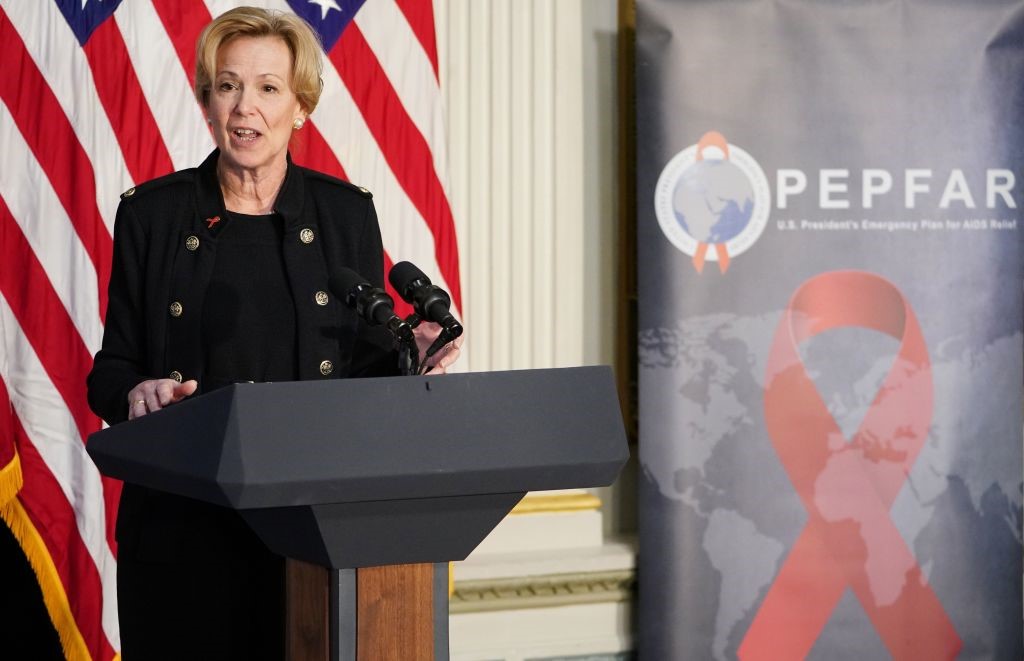

    Ambassador-at-Large Deborah Birx giving a speech from a podium with an American flag and PEPFAR banner in the background
  • Read more: Data-driven Medicine Needs a New Profession: Health Information Counseling

    Data-driven Medicine Needs a New Profession: Health Information Counseling

    By Barbara Prainsack, Alena Buyx, and Amelia Fiske Have you ever clicked ‘I agree’ to share information about yourself on a health app on your smartphone? Wondered if the results of new therapy reported on a patient community website were accurate? Considered altering a medical device to better meet your own needs, but had doubts…

    Medicine doctor and stethoscope in hand touching icon medical network connection with modern virtual screen interface, medical technology network concept
  • Read more: From bioethics to medical anthropology to humanities and back: A year in review

    From bioethics to medical anthropology to humanities and back: A year in review

    By Yusuf Lenfest I thought I would take this opportunity to reflect on the past year, where I will be in the future, and how the student fellowship has impacted me. I still hope to contribute to the Bill of Health blog going forward, but as my last official post as a Petrie-Flom Student Fellow,…

  • Read more: Psychoneuroimmunology and the mind’s impact on health

    Psychoneuroimmunology and the mind’s impact on health

    By Yusuf Lenfest If you are a skier like me, you likely revelled in watching the alpine skiing events during this years’ Olympic Winter Games held in Pyeongchang, South Korea. Having raced myself when I was younger, I recall the feeling of being in the starting gate with all the anticipation and excitement it brings….

  • Read more: Culture, Medicine, and Psychiatry

    Culture, Medicine, and Psychiatry

    By Yusuf Lenfest Professor Robert Sapolsky, a professor of biology and neurology at Stanford University, rightly identifies depression as a particularly crippling disease insofar as it affects one’s very response mechanisms and modes of coping, namely, experiences of gratitude, joy, pleasure—at bottom, some of the key emotions of resistance and healing. In discussing depression, he…

  • Read more: Religion, Health, and Medicine: the Dialectic of Embedded Social Systems

    Religion, Health, and Medicine: the Dialectic of Embedded Social Systems

    By Yusuf Lenfest The philosopher in me understands that there are universal principles in logic, mathematics, and in basic scientific tenets such as the law of gravity. Be that as it may, the historian in me recognizes that we inherit epistemologies and ways of thinking from those before us, and from our own historical and…

  • Read more: Understanding the Neuroscience and Philosophy of Consciousness

    Understanding the Neuroscience and Philosophy of Consciousness

    By Yusuf Lenfest Think of the last few times you’ve had a very lifelike dream. Running, reading, or having conversations with others, are all activities that might happen during a particularly vivid dream. But would this be considered consciousness? Surely being in a state of sleep is not the same as being in a waking…

  • Read more: Medicine and Ethics: Religious or Secular?

    Medicine and Ethics: Religious or Secular?

    By Yusuf Lenfest There is no lack of controversy when talking about religion and medicine in America today. Medicine is studied, practiced, and firmly rooted in the corporal world while religion draws inspiration from texts, traditions, and the incorporeal. Yet from an historical perspective, religious pasts do shape the present, particularly in the realm of…