Data Privacy

  • Read more: Your Records Trained the Algorithm. What Did You Get Back?

    Your Records Trained the Algorithm. What Did You Get Back?

    Delegates at October’s UN biodiversity summit in Yerevan arrived with an awkward number in their briefing papers. The Cali Fund, created two years ago to collect a share of profits from users of genetic sequence data, had received only $6,000 against an expected $1 billion a year. 

  • Read more: When Surveillance Becomes Science: The Data the FDA Should Not Trust

    When Surveillance Becomes Science: The Data the FDA Should Not Trust

    In 2024, the Federal Trade Commission (FTC) banned a data broker called X-Mode Social from selling sensitive location data, charging that the company sold precise phone location data that could be used to track visits to reproductive health clinics, addiction treatment centers, and other sensitive sites. 

  • Read more: Rethinking Maryland v. King Amid the Changing Landscape of Technology and Privacy

    Rethinking Maryland v. King Amid the Changing Landscape of Technology and Privacy

    In a landmark 2013 decision, Maryland v. King, the Supreme Court upheld mandatory DNA collection from arrestees as part of booking procedures, likening cheek swabs to fingerprinting. But 13 years later, renewed public concern about genetic privacy seriously undermines the assumptions underlying King.

  • Read more: Fall 2025 Health Law Workshops

    Fall 2025 Health Law Workshops

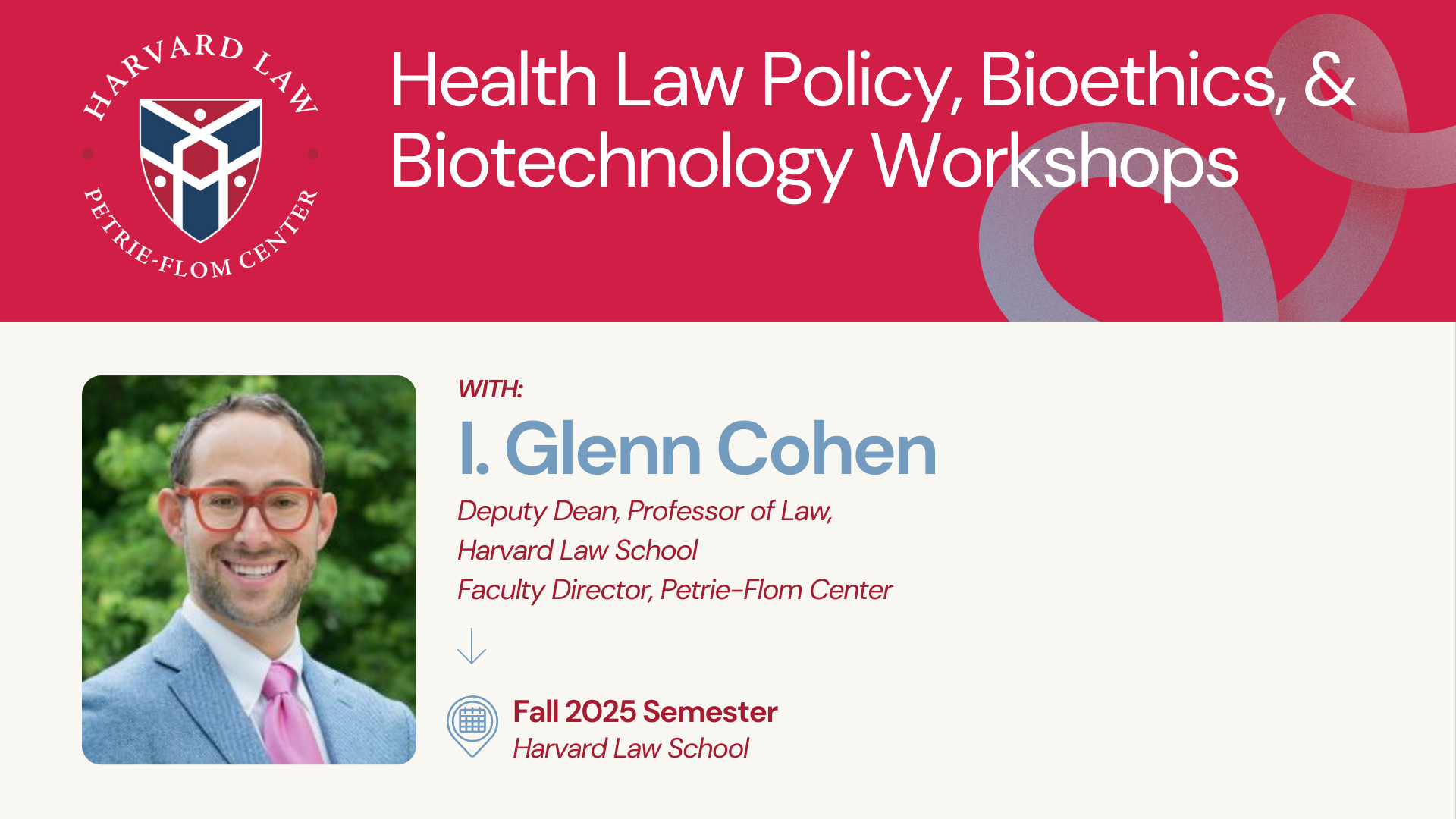
    The Health Law Policy, Bioethics, and Biotechnology Workshop provides a forum for discussion of new scholarship in these fields from the world’s leading experts. The workshop is led by Professor I. Glenn Cohen, and presenters come from a wide range of disciplines and departments. Harvard graduate students may register to take the workshop for course…